

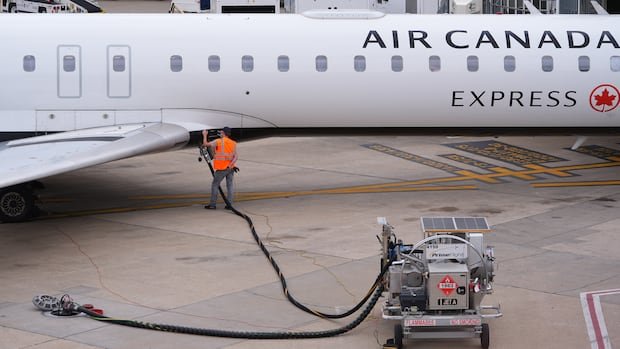

Air Canada has halted operations on six routes, both domestic and international, due to the surge in fuel costs driven by the conflict in the Middle East. The airline stated that jet fuel prices have doubled since the onset of the Iran conflict, impacting some less profitable routes and flights that are no longer financially viable. Consequently, schedule adjustments, including frequency reductions, are being implemented.
Effective May 28, Air Canada has suspended the Fort McMurray, Alta., to Vancouver domestic route, while the Yellowknife to Toronto route will be suspended as of August 30. Additionally, service from Salt Lake City to Toronto will be temporarily suspended starting June 30, with plans to resume in 2027. Flights between Toronto and Montreal to New York’s John F. Kennedy International Airport will also be temporarily suspended from June 1, with operations set to resume on October 25.
Moreover, the planned route from Guadalajara, Mexico, to Montreal has been suspended by Air Canada. The airline assured that affected customers will be provided with alternative travel options. This suspension will roughly impact one percent of Air Canada’s annual available seat miles.
The decision by Air Canada comes at a time when the aviation industry is grappling with an unprecedented fuel crisis. With the U.S.-Israeli conflict against Iran extending beyond six weeks, fuel prices have more than doubled, leading to increased costs for consumers. Notably, WestJet has also announced flight consolidations on some lower-demand routes to manage the impact of rising fuel prices.
European jet fuel supplies are dwindling, with warnings of possible flight cancellations if oil supplies remain blocked due to the Iran war. John Gradek, an aviation management lecturer at McGill University, emphasized the severity of the crisis, highlighting the potential long-term repercussions on aviation operations even if the Strait of Hormuz reopens.
Several airlines, including Air Canada, WestJet, Porter Airlines, and Air Transat, have responded to the fuel price surge by adjusting fares or adding surcharges. While Iran has announced the complete opening of the Strait of Hormuz for commercial vessels following a ceasefire agreement between Israel and Lebanon, the U.S. naval blockade on Iran remains in effect until a deal is reached. Oil prices experienced a 10 percent decline after Iran’s announcement, signaling a potential resumption in oil tanker movements from the Persian Gulf.