

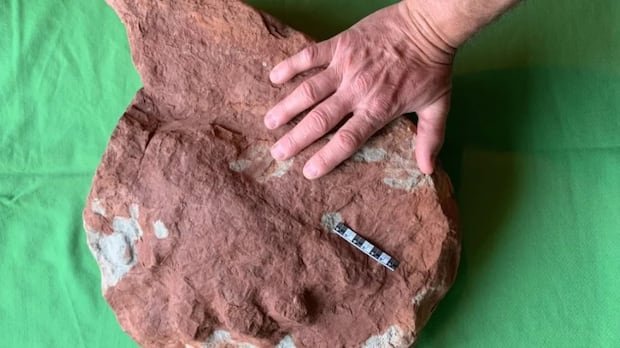

Prince Edward Island is gaining recognition beyond its traditional associations with Anne of Green Gables, beaches, and potatoes, as a geologist from Nova Scotia suggests the province is becoming a promising frontier for fossil discoveries. John Calder, a geoscientist working with the P.E.I. government to identify fossils, noted a recent surge in discoveries that has captured the interest of researchers worldwide.
Contrary to previous beliefs that P.E.I.’s red sandstone, known as “red beds,” would not preserve fossils well, Calder explained that the Island has proven otherwise. He emphasized the importance of actively seeking out fossils, as many recent findings have been made by local residents rather than professional scientists. Patrick Brunet, a North Rustico resident, has been instrumental in uncovering significant fossils on P.E.I.
Islanders will have the opportunity to view these fossil discoveries up close during Fossil Day on April 10 at the Charlottetown Library Learning Centre. Additionally, Calder will be discussing the Island’s fossil treasures at a Nature P.E.I. meeting on April 7.
Calder, who authored the book “Island at the Centre of the World” exploring P.E.I.’s geological history, highlighted the significance of the province’s red rocks dating back nearly 300 million years to the Permian period. During this era, reptiles were diversifying, and the warm climate facilitated the preservation of footprints, skeletons, and other fossils in the sediments deposited by ancient rivers.
The fossils discovered on P.E.I. are now under the care of Parks Canada and the P.E.I. Museum and Heritage Foundation. Calder expressed optimism about establishing a permanent collection to showcase the Island’s rich fossil heritage to both residents and visitors, envisioning a future museum dedicated to these remarkable findings.