

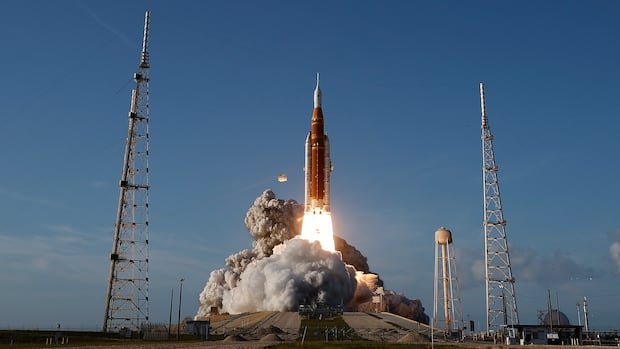

Four brave astronauts, including Jeremy Hansen from the Canadian Space Agency and NASA’s Reid Wiseman, Victor Glover, and Christina Koch, are embarking on a thrilling 10-day journey to the moon. The launch occurred at 6:35 p.m. ET on Wednesday from the Kennedy Space Center, marking the first crewed mission to the moon in 50 years.
NASA administrator Jared Isaacman expressed excitement, stating, “After a 54-year hiatus, NASA is once again sending astronauts to the moon.” The crew, known as Artemis II, will orbit Earth for a day before igniting the main engine to propel them towards the moon, covering a record distance of approximately 405,000 kilometers.
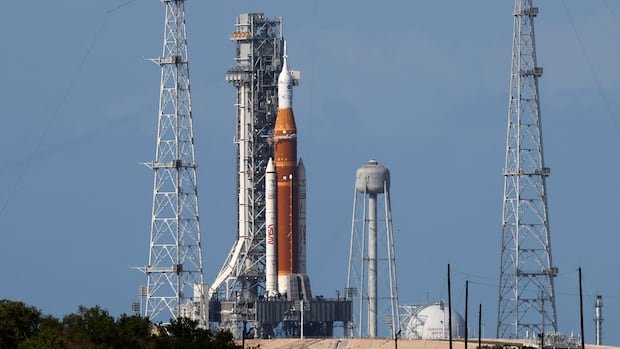
Astronauts Victor Glover, Christina Koch, and Jeremy Hansen share their thoughts before the historic liftoff according to NASA launch director Charlie Blackwell-Thompson.
The crew will conduct a flyby of the moon six days into the mission before returning to Earth. NASA aims to use this mission as a stepping stone for future expeditions that may lead to manned landings on the lunar surface.
- Cross Country Checkup is seeking your thoughts on the importance of space exploration and its value. Share your opinionhere for a chance to be featured on the show this Sunday
As the mission progresses, the astronauts are evaluating the functionalities of the Orion spacecraft. Here are some of the main objectives of the Artemis II mission.
Initial Phases
Following liftoff, the solid rocket boosters detached, and the core stage separated, descending into the ocean. The crew will spend about 25 hours in Earth’s orbit before proceeding on their journey.
While in Earth’s orbit, one task is to assess the maneuverability of the Orion spacecraft. The interim cryogenic propulsion stage (ICPS) will maneuver Orion into a high-Earth orbit before separating, allowing the crew to test its handling.
Following the test, the ICPS will re-enter Earth’s atmosphere