

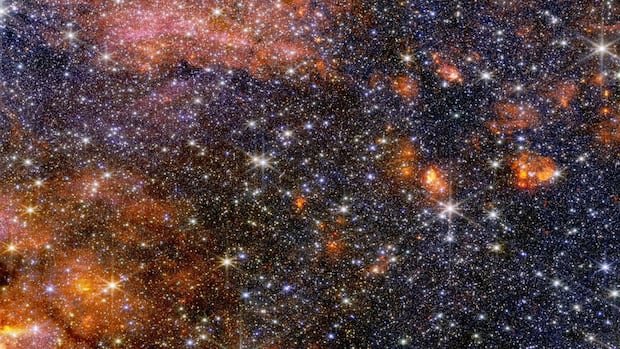

Researchers are reconsidering the search for alien signals, narrowing down potential signals from 12 billion to 100, thanks to SETI. While life is definitively known to exist on Earth, the possibility of life elsewhere in the universe sparks curiosity as we gaze at the expanse of space. Scientists identify gases like oxygen, carbon dioxide, and methane in a planet’s atmosphere as potential indicators of life.
The Search for Extraterrestrial Intelligence (SETI) focuses on technosignatures, which are signs of technology created by intelligent beings, such as unique electromagnetic signals. These signals, unlike natural cosmic noises, would exhibit structured patterns similar to Earth’s radio and television broadcasts.
A recent study published in The Astrophysical Journal highlights a complexity in the search for alien signals: interference from space weather originating from stars, where potential signals arise. Scientists have long targeted narrowband signals, which are highly focused energy beams at a single frequency, as potential indicators of intelligent life.
However, the study’s lead author, Vishal Gajjar, emphasizes that stars’ interplanetary mediums can distort narrowband signals, broadening and flattening them, potentially masking their artificial origin. By analyzing radio transmissions between Earth and spacecraft in our solar system, researchers have developed models to estimate the interference stars may cause in signal transmissions from other systems.
The study suggests that stellar turbulence can significantly alter signals, making the search for “needle-like” signals less likely to succeed. Instead, researchers will need to adapt tools to detect broader, fainter signals, overcoming the challenges posed by space weather interference.
Despite these obstacles, Gajjar remains hopeful about discovering extraterrestrial life, citing technological advancements that enable more extensive data analysis. With the aid of artificial intelligence and advanced processing units, researchers can now analyze data more efficiently, increasing the likelihood of finding life beyond Earth.