

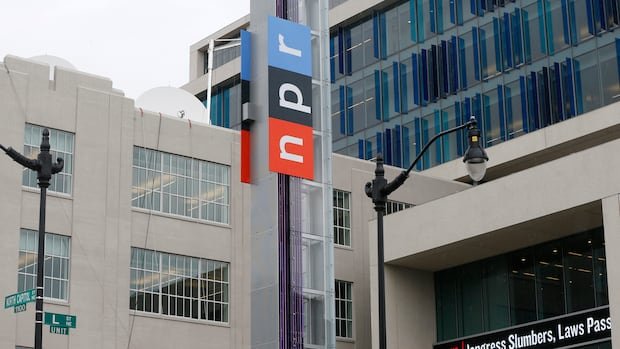

A U.S. federal judge has permanently blocked the Trump administration from cutting federal funding for National Public Radio (NPR) and the Public Broadcasting Service (PBS) citing the First Amendment. This decision by U.S. District Judge Randolph Moss may face appeals, but the damage to the public broadcasting system has already been significant due to actions taken by the president and Congress.
Judge Moss deemed President Trump’s executive order to cease funding for NPR and PBS unlawful and unenforceable. He emphasized that the First Amendment protects against viewpoint discrimination and retaliation, stating that the government’s action was clearly targeted at viewpoints disliked by the president.
Trump’s order directed all federal agencies to terminate funding to NPR and PBS, which are headquartered in Washington, D.C., and Arlington, Va., respectively. The judge highlighted that the government failed to provide any legal precedent for barring entities based on past speech from federally funded activities.
Last year, Trump expressed a desire to defund NPR and PBS, alleging bias in favor of Democrats. The judge criticized the message sent by the president, stating that NPR and PBS were being excluded from federal benefits due to their perceived left-wing news coverage.
NPR accused the Corporation for Public Broadcasting (CPB) of violating its free speech rights by cutting off grant money appropriated by Congress. NPR’s president, Katherine Maher, emphasized that public media serves the American public’s interest rather than any political agenda.
PBS chief Paula Kerger welcomed the ruling, labeling the executive order as unconstitutional viewpoint discrimination and retaliation. She reaffirmed PBS’s commitment to its mission of educating and inspiring Americans.
Plaintiffs’ attorney Theodore Boutrous hailed the ruling as a victory for the First Amendment and freedom of the press. He emphasized that the government had overstepped its bounds with the executive order by attempting to suppress disfavored expression.
The judge acknowledged that some of the legal claims against the news outlets were moot due to CPB’s closure. However, he noted that the executive order extended beyond CPB, directing all federal agencies to refrain from funding NPR and PBS regardless of the program’s nature or merit.
NPR and three public radio stations filed a lawsuit against administration officials last May, with Trump named as a defendant. The case did not involve Congress, which had a significant role in the public broadcasting funding issue.
Trump’s executive order immediately impacted PBS’s children’s programming funding, leading to layoffs within the PBS Kids staff. The order did not affect Congress’s decision to eliminate federal appropriations for PBS and NPR, ultimately resulting in the closure of CPB, the funding source for the TV and radio networks.