

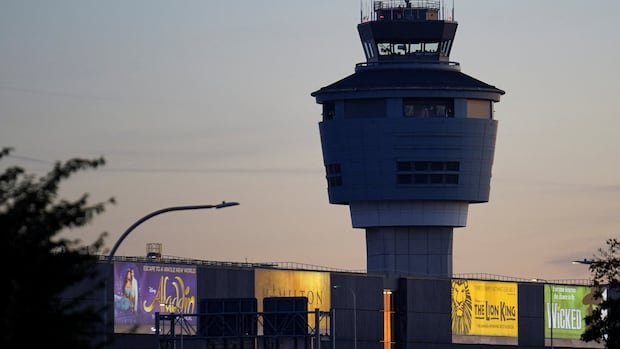

Air traffic controller staffing at LaGuardia airport during the incident involving an Air Canada aircraft and a fire truck may have breached protocols by merging roles before midnight, as per a document reviewed by Reuters. The tragic event occurred around 11:37 p.m. ET on March 22, leading to the loss of both pilots, reigniting concerns about deficiencies in U.S. air traffic control staffing and the workload faced by controllers nationwide.
Controllers, including supervisors, are frequently compelled to assume combined roles managing both local air traffic and ground operations due to staffing shortages, as per insights from various air traffic controllers across the country. The U.S. National Transportation Safety Board (NTSB) disclosed that, as part of its investigation into the incident, it is inquiring about the responsibilities executed by each controller.
An examination of the incident reveals the potential violation of standard procedures at LaGuardia tower if the controller in question was multitasking in handling both air and ground duties. The NTSB highlighted that, following a previous collision in 1997 at LaGuardia, measures were implemented to prevent the consolidation of local and ground positions before midnight at the airport.
Guidelines stipulate that positions at LaGuardia tower should not be merged into a single role before midnight local time or 90 minutes post-shift commencement, as outlined in a 2023 document observed by Reuters, which remains effective in 2026. The Federal Aviation Administration affirmed its cooperation with the NTSB in accident investigations and pledged to take requisite safety measures based on the available evidence.
During the tragic event, two controllers were on duty at a designated area within the control tower, with one managing active runways and immediate airspace, while the other, the controller-in-charge, was responsible for providing departure clearances to pilots, according to NTSB Chair Jennifer Homendy. Ambiguity exists regarding the individual responsible for ground control duties, as indicated by conflicting information.
In the aftermath of the incident, air traffic controllers and aviation experts emphasized that the outcome of air crash investigations typically points to a combination of factors rather than a singular cause. The responsibilities and sign-on times of the controllers involved have been scrutinized, with adherence to protocols regarding the combination of positions being a focal point of the inquiry.
The circumstances surrounding the collision at LaGuardia underscore the critical importance of upholding established procedures to ensure the safety of air traffic operations. The incident occurred amidst weather-related delays, resulting in an elevated volume of flight operations at the airport, prompting controllers to manage a more demanding workload than usual. Additional controllers were either called in or extended their shifts to cope with the heightened traffic volume and complexity of the situation.