

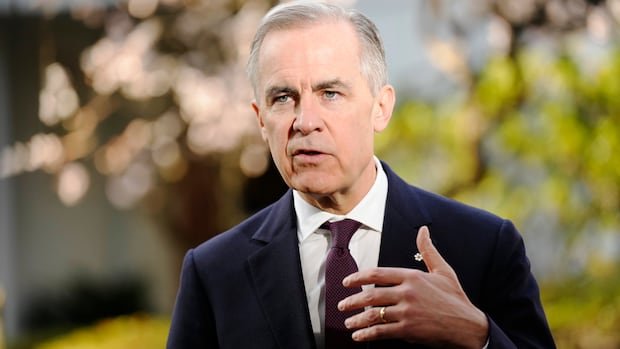

Prime Minister Mark Carney unveiled a $3.8 billion funding initiative on Tuesday to safeguard nature, aligning with the government’s conservation objectives. Alongside public contributions, the government aims to secure private sector investments to support the conservation plan, focusing on establishing new national parks and marine reserves.
During a press briefing in Wakefield, Que., Carney emphasized the necessity of significant financial backing for the ambitious task of creating these protected areas, stressing that public funding alone would be insufficient. The government’s target is to conserve 30% of Canada’s lands and waters by 2030, with the current protected land area standing at 14%.
These conservation goals were set following the UN Biodiversity Conference (COP15) in Montreal in 2022 under the Trudeau administration. Concerns have been raised by environmental groups regarding the government’s commitment to long-term funding in line with its conservation aspirations.
Carney outlined that the newly allocated funds would be distributed across three key areas: protecting nature, enhancing Canada’s infrastructure, and promoting capital mobilization while valuing nature. Immediate plans include establishing two new conservation sites: the Wiinipaawk Indigenous Protected Area and National Marine Conservation Area in eastern James Bay, Quebec, and the Seal River Watershed National Park in Manitoba.
Furthermore, the government intends to introduce “other effective area-based conservation measures” to balance conservation with other activities. The initiative includes the creation of up to 14 new marine-protected and conserved areas, as well as up to 10 new marine conservation areas. Notably, the Arctic marine areas of Sarvarjuaq and Qikiqtait are designed to safeguard polar bear, walrus, and beluga whale populations.
If successfully implemented, these new marine protected areas would cover 12% of Canada’s waters, pushing the total protected waters to 28%. Carney expressed determination to bridge the remaining gap in conservation efforts.
In response, the federal Conservatives criticized Carney’s announcement, labeling it as “illusions” and highlighting past environmental target failures. The Official Opposition’s spokesperson, Sam Lilly, accused the government of creating a new bureaucratic structure that consumes taxpayer funds without yielding significant results, emphasizing the need for tangible outcomes over symbolic gestures.