

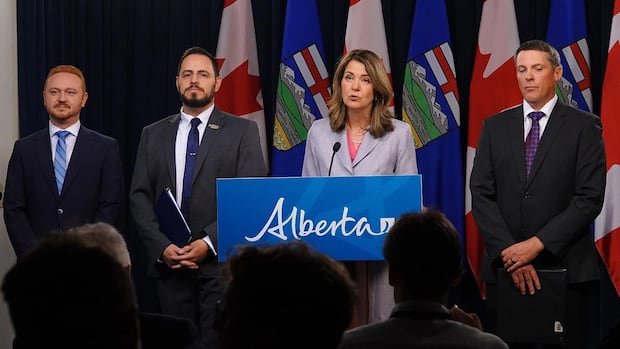

Alberta’s provincial government has swiftly passed Bill 2, known as the Back to School Act, in response to a prolonged contract dispute that led to teachers’ strike since early October. The legislation, approved early Tuesday morning following an overnight session in the provincial legislature, mandates striking teachers to return to work by Wednesday under a collective agreement enforced through the notwithstanding clause for a four-year term.
Premier Danielle Smith’s government, with 47 seats in the 87-seat Alberta legislature, introduced the legislation to expedite the end of the strike by the Alberta Teachers’ Association (ATA). The government utilized legislative measures to minimize debate on all stages of the bill, aiming to resume classroom activities promptly.
The ATA, representing 51,000 teachers, had walked off the job on October 6 after rejecting two previous agreements negotiated by their bargaining team. Bill 2 incorporates the terms of a tentative agreement, turned down by nearly 90% of Alberta teachers, into law. The imposed collective agreement, effective from September 1, 2024, to August 31, 2028, includes annual salary increments of three percent and a commitment to hire 3,000 teachers and 1,500 educational assistants over three years.
Despite the government’s assertion of fairness in its offer, the ATA has expressed concerns about issues such as large class sizes and adequate support for student needs in the classroom. The province had previously established an action team to address classroom aggression and student complexity in Alberta schools, with a forthcoming final report and a newly announced task force to tackle class size and complexity issues.
Critics, including ATA President Jason Schilling and opposition leader Naheed Nenshi, have condemned the government’s use of the notwithstanding clause as an authoritarian move that undermines democratic processes. Schilling denounced the legislation as an infringement on teachers’ rights and warned of its broader implications for Albertans. Nenshi criticized the Premier’s decision, suggesting alternative dispute resolution methods such as binding arbitration.
The legislation imposes financial penalties for non-compliance, with individuals facing fines of $500 per day and the union up to $500,000 per day for defiance. It also suspends local bargaining until 2028. The government’s firm stance on the legislation contrasts with the concerns raised by the ATA and opposition leaders, setting the stage for continued tensions despite the resumption of classroom activities.