

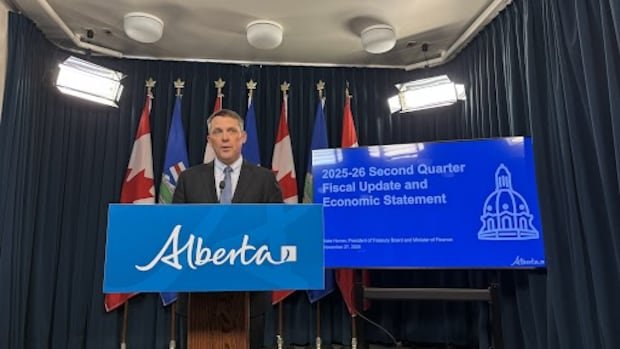

Alberta’s budget outlook in the second-quarter update remains consistent with the previous gloomy forecast delivered in August. Finance Minister Nate Horner projects a $6.4 billion deficit for the fiscal year, an increase of $1.2 billion from the initial estimate in the 2025-26 budget released in February.
The update attributes the expanding deficit to softening oil prices, noting a 30% drop in natural resource revenue compared to the previous year. Expectations suggest that oil prices will continue to stay low. Horner highlighted a $28 decrease in US oil prices since 2022, emphasizing Alberta’s increasing dependence on fossil fuels over the past decade. He stressed that every dollar shift in oil prices impacts the province’s revenue significantly.
Despite challenges such as population growth and high unemployment affecting the economic landscape, there have been positive developments. Horner pointed out record-high oil production levels and increased exports to Asian markets. The improved financial outlook in the recent update is attributed to larger federal transfers adjusting to match Alberta’s population growth.
Anticipating more deficit budgets in the future, Horner emphasized the need for tough decisions ahead, with a focus on prioritizing education, healthcare, and addressing volume-related pressures.
Court Ellingson, NDP shadow minister for finance, expressed concerns about high unemployment rates and a relatively low minimum wage hindering Albertans from reaping the benefits of the province’s GDP growth. He raised issues regarding government spending, citing expenditures on privatizing lab services and controversial children’s medicine purchases.
The fiscal update disclosed the utilization of $881 million from contingency funds for new labor agreements, including deals with teachers and healthcare workers. Out of the allocated $4 billion for emergencies, $1.7 billion has been expended. The total spending of $79 billion reflects a slight increase from the previous budget and a significant rise of $5.3 billion from the previous year.
The update coincided with the announcement of a pipeline agreement to the West Coast between Alberta and the federal government, signaling positive developments amid ongoing challenges. Horner acknowledged that while the agreement holds promise for the future, its impact may not be immediate but will be substantial in the long run.