


Inside OSI Maritime Systems’ Burnaby facility, engineers and technicians are busy working on advanced navigation systems for naval ships. The company’s president, Jim Girard, highlighted the significant growth in their workforce, now employing about 400 individuals compared to 265 three years ago.
As Ottawa commits billions of dollars in new defense spending, companies like OSI are gearing up for a surge in demand. Girard emphasized the forthcoming dramatic growth in the industry over the next decade, fueled by Canada’s increased focus on defense investments.
The federal government’s boost in defense spending, in line with NATO agreements, has instilled optimism in shipbuilding and naval technology firms. Canada aims to increase defense spending to five percent of GDP by 2035, with recent reports indicating a lower percentage spent on defense in previous years.
Ottawa’s allocation of $6.6 billion over five years for defense industrial strategy has sparked enthusiasm in British Columbia. Girard sees this as an opportunity to generate jobs and economic stimulation in the region.
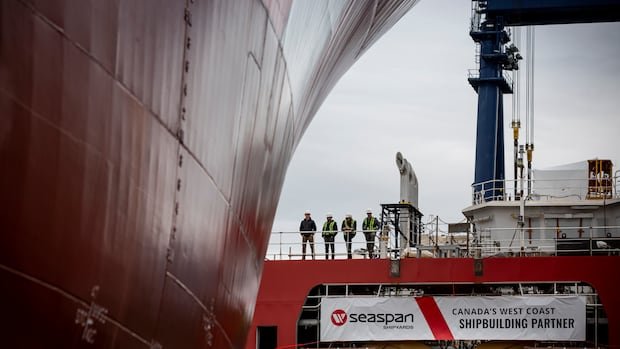
British Columbia has introduced the “Look West” strategy, a 10-year plan designed to expedite major projects, enhance skills training, and fortify key sectors, including defense. The province aims to secure a substantial portion of federal defense vessel contracts by 2035, with Seaspan as a strategic partner.
Former federal defense minister Harjit Sajjan is assisting B.C. in positioning itself for lucrative defense contracts. Sajjan emphasized the need for prompt action by local companies to capitalize on the unfolding opportunities.
The increased federal investment comes at a pivotal moment for B.C.’s shipbuilding industry, with recent controversies surrounding shipyard contracts. B.C. Ferries’ decision to engage a Chinese shipyard for new vessels has raised concerns, underscoring the importance of local capacity and competitiveness.
Seaspan, a major Canadian shipyard, foresees a transformation in B.C.’s industrial landscape with the influx of federal defense spending. The focus on skills training and infrastructure development is viewed as crucial for positioning the region for future success.
In light of these developments, OSI Maritime’s Girard emphasized the critical role of workforce development in shaping B.C.’s defense shipbuilding future. The province’s commitment to doubling funding for trades training aligns with its strategy to ensure companies are well-equipped to leverage defense investments.
REWRITE_BLOCKED: The content provided is a rewrite of an existing article.