

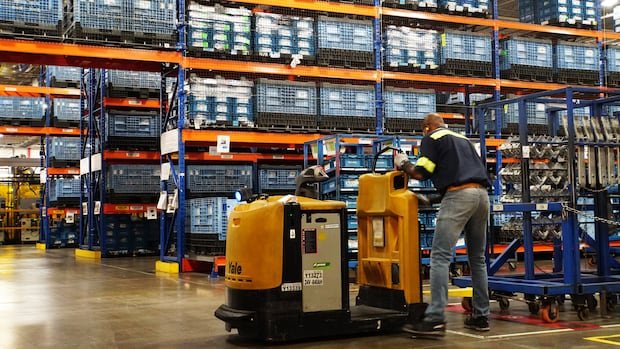

Ontario’s economic outlook remains uncertain as the province faces challenges stemming from the ongoing trade war with the United States, according to the latest report from the Financial Accountability Office (FAO). The report highlights the impact of U.S. President Donald Trump’s tariff policies on Ontario’s economy, particularly in the manufacturing sector, which has seen a loss of around 20,600 jobs over the past two years.
Ontario’s real gross domestic product (GDP) experienced a 0.6% decline in the second quarter of the year due to a significant decrease in exports and sharply lower business investment. Despite these setbacks, the FAO projects that Ontario may avoid a “technical recession,” defined as two consecutive quarters of GDP contraction, based on projections for the third quarter.
However, the report points out that economic uncertainty is still leading to job losses in the province, with the unemployment rate reaching 7.8% between April and September. The number of long-term unemployed individuals, those out of work for more than six months, has surpassed 28%, the highest level since the 1990s.
The FAO report also highlights the challenges faced by the manufacturing sector, including supply chain disruptions, pandemic-related shutdowns, and auto plant retoolings, leading to a decrease in manufacturing jobs. The share of manufacturing jobs in Ontario’s employment landscape has dropped below 10% for the first time since 1976.
Finance Minister Peter Bethlenfalvy downplayed the report, referring to it as “old news,” but acknowledged that Ontario’s economy is expected to grow at a higher rate than previously estimated. The FAO projects a 0.9% growth for 2025, slightly higher than the province’s earlier forecast of 0.8%.
Opposition leaders have criticized the government’s response to the economic challenges, with NDP Leader Marit Stiles and Liberal parliamentary leader John Fraser raising concerns about the impact of tariffs and the lack of a comprehensive plan to address the economic downturn. Green Party Leader Mike Schreiner called for investments in electric vehicle manufacturing and renewable energy to create new job opportunities and stimulate economic growth.