

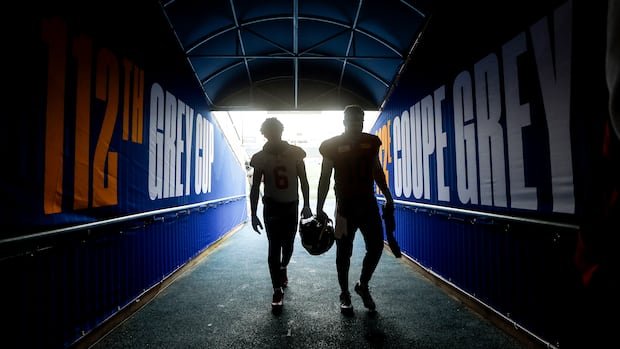

The CFL is currently addressing fan dissatisfaction regarding upcoming rule modifications that some traditionalists argue compromise the distinctiveness of the Canadian football game compared to its more popular American counterpart. This comes as the league prepares for its championship game on Sunday.
In September, the Canadian Football League unveiled the rule adjustments set for 2026 and 2027, which include shortening the Canadian field, relocating the goalposts to the back of the end zone, and making other tweaks. This move follows a surge in Canadian patriotism, evident after U.S. President Donald Trump referred to Canada as the “51st state” earlier this year.
During the recent federal election campaign, Prime Minister Mark Carney’s use of the phrase “elbows up,” inspired by ice hockey, in reference to the U.S., played a role in his unexpected re-election victory for the Liberal Party. This increasing sentiment of Canadian pride has also been demonstrated through actions like booing the American anthem at hockey games and supporting the Toronto Blue Jays in their World Series endeavors.
The recent changes in Canadian football have evoked strong patriotic emotions among fans. Patrick Land, a Winnipeg resident who leads a Facebook group opposing the modifications, criticized the CFL for implementing significant rule changes without consulting fans or players. He highlighted the league’s timing as insensitive, given the current political climate with the U.S., and expressed concerns about the perceived “Americanization” of the game.
Fans have gathered in Winnipeg for a multi-day festival leading up to the Grey Cup game on Sunday, featuring a match between the Montreal Alouettes and the Saskatchewan Roughriders at Princess Auto Stadium. They reject any notion of Canadian football as a mere adaptation of American football, emphasizing its unique origins dating back to collaborative developments between Canada’s McGill University and Harvard University in the 1870s.
Canadian football stands out with its longer and wider field compared to the U.S., front-positioned goalposts, deeper end zones for increased touchdown opportunities, and a lineup of 12 players per side instead of 11. Notably, the CFL allows teams only three downs for a 10-yard gain, promoting aggressive gameplay, unlike the American four downs system.
Despite facing backlash, CFL commissioner Stewart Johnston defended the changes, emphasizing the league’s commitment to the Canadian game’s core aspects. He highlighted the unique features of Canadian football, including three downs, 12 players, unlimited motion, a 65-yard width, and expansive end zones.
The CFL has historically struggled with low attendance in major cities and limited TV revenue compared to the NFL. The recent rule adjustments aim to attract new fans, but a recent Angus Reid survey revealed that half of regular fans and three-quarters of hardcore CFL enthusiasts did not favor the changes. This presents a challenge for the league to balance retaining existing supporters while enticing new ones, making it a risky endeavor.