


The U.S. military has directed 2,500 marines and an amphibious assault ship to the Middle East, according to a U.S. official on Friday, marking a significant increase in forces in the region following almost two weeks of conflict with Iran.
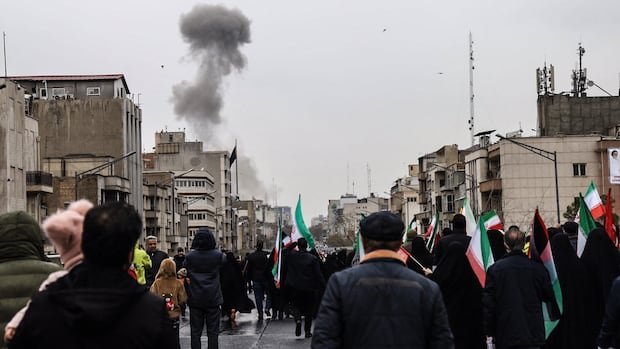
Simultaneously, a substantial explosion shook a central square in the Iranian capital during an annual state-organized rally supporting Palestinians and advocating for the end of Israel. Israel had previously warned about targeting the central Tehran area.
While there were no casualties reported, the decision to proceed with the mass demonstration, attended by senior government officials, and Israel’s threat to strike the location, emphasized the intense resolve on both sides deep into the ongoing conflict. Iran has been launching widespread missile and drone attacks on Israel and neighboring Gulf states, while also blocking the vital Strait of Hormuz, crucial for global oil trade. In response, U.S. and Israeli warplanes have been targeting military and other sites within Iran.
In a separate development, Israel stated it had commenced a series of strikes on Iran’s infrastructure, hitting over 200 targets in Iran within 24 hours, including missile launchers and defense systems.
The deployment of the marines and assault ship was disclosed by an anonymous U.S. official. These forces, hailing from the 31st Marine Expeditionary Unit and the USS Tripoli, are specialized in amphibious landings, embassy security, civilian evacuations, and disaster relief. However, this deployment does not necessarily imply an imminent ground operation.
The 31st Marine Expeditionary Unit and the USS Tripoli, along with other amphibious assault ships, are currently at sea in the Pacific Ocean, based in Japan. The Tripoli was recently observed near Taiwan, indicating it is more than a week away from Iranian waters.
President Donald Trump announced the destruction of military targets on Iran’s Kharg Island, hinting at potential actions against the island’s oil infrastructure. Iran’s Supreme Leader Mojtaba Khamenei vowed to continue fighting and threatened to open new battlefronts, despite disruptions to global energy supplies and the economy.
The situation escalated with multiple attacks across the region, including strikes on Gulf Arab states by Iran. In response, the U.S. Navy’s USS Oscar Austin intercepted an Iranian ballistic missile over Turkey. Additionally, a building in the Dubai International Financial Center sustained damage from intercepted debris.
Despite the ongoing conflict, rallies and attacks persist, with casualties reported in various locations, including Lebanon and Oman. The situation remains tense as both sides continue their military actions and rhetoric.