

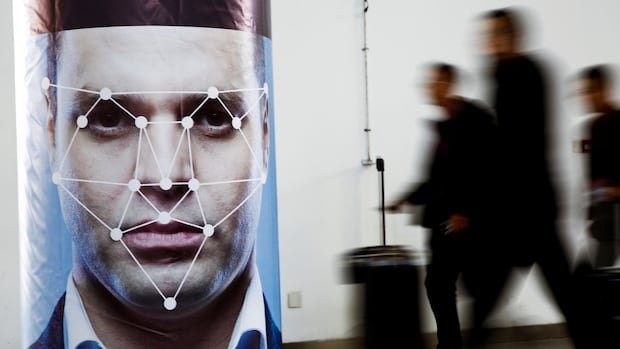

Warren Shepell encountered a troubling situation recently as he was about to board his flight from Cleveland back to Toronto. According to Shepell, two officers in uniform approached him on the boarding ramp and one of them took his picture without any explanation. Feeling surprised and violated, the Canadian psychologist expressed his dismay at the lack of communication regarding the incident.
The United States has been utilizing facial biometrics for close to ten years to verify the identities of international travelers arriving at U.S. airports. This process involves capturing travelers’ photos and using biometric facial comparison technology to ensure alignment with the images on their travel documents. Now, the U.S. Customs and Border Protection (CBP) aims to extend this program by photographing departing passengers at all international U.S. airports and collecting images of travelers at sea ports and land borders upon entry and exit.
CBP plans to fully implement facial biometric technology at land borders by next year and expects complete rollout at sea ports and airports within the next three to five years. A new rule announced by the U.S. Department of Homeland Security mandates non-U.S. citizens, including Canadians, to participate in the facial biometrics program, with the images retained in a DHS database for up to 75 years.
Despite the expansion of the program, concerns about privacy have been raised by experts who fear potential misuse of the technology. The lack of federal laws regulating facial biometrics in the U.S. has sparked worries about data privacy and potential surveillance misuse. Notably, the Trump administration has been criticized for repurposing personal data for immigration enforcement beyond its intended scope.
To address privacy concerns, CBP assures that photos of U.S. citizens are retained for a limited period and provides the option to opt out of facial biometrics by requesting a manual inspection. Although Canadians can currently opt out, this choice will no longer be available after the new DHS rule takes effect on December 26.
Given the implications of the facial biometrics program, Warren Shepell is reconsidering future travel to the U.S. and advocates for better communication with passengers regarding photo capture by border officers. U.S. immigration lawyer Len Saunders believes that the mass photographing of Canadians could negatively impact the tourism industry, further deterring foreign visitors from traveling to the United States.
As travel to the U.S. from Canada has already declined, concerns over facial biometrics could exacerbate the situation. Despite potential tourism implications, it is unlikely that the Trump administration will prioritize addressing these concerns, as per Saunders’ observations.