

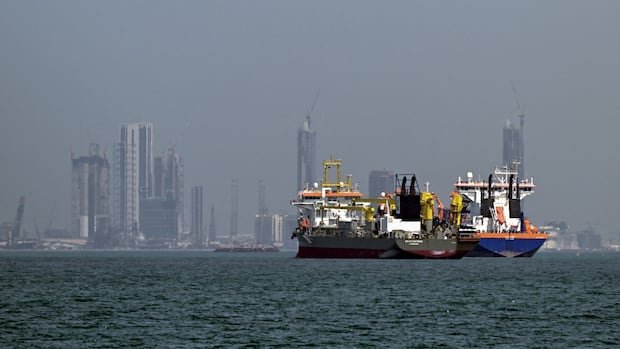

Amid rising tensions in the Middle East near the Strait of Hormuz, merchant vessels and their crews are facing increased risks. According to the UK Maritime Trade Operations Centre, thirteen ships have been targeted in the strait since the U.S. and Israel initiated their conflict with Iran on February 28, resulting in the deaths of at least seven crew members.
Phillip Belcher, the marine director for Intertanko, a global organization representing approximately 200 tanker owners, described the situation as extremely perilous, stating that seafarers are living in constant fear. The ongoing conflict has led to a halt in marine traffic, with the number of ships passing through the strait dropping significantly from an average of 151 daily in February to just four on a recent Saturday.
Iran has threatened to block oil exports passing through the strait during the conflict, further exacerbating concerns for the safety of merchant vessels and their crews. Some ships have resorted to altering their tracking data to appear connected to China in a bid to minimize the risk of being targeted, while others are turning off their automatic identification systems to hide their locations.
The narrowness of the Strait of Hormuz, spanning only 32 kilometers, coupled with the presence of Iranian spotters, makes it nearly impossible for ships to pass through undetected. Consequently, hundreds of vessels, including cargo ships carrying various goods, are stranded in the Persian Gulf, affecting approximately 20,000 seafarers in the region.
The escalating risks have also led to challenges for shipping companies, such as negotiating higher insurance premiums due to the heightened threat levels. Nils Haupt, the senior director of communications at German shipping giant Hapag-Lloyd, emphasized the unprecedented nature of these challenges, noting that commercial shipping has never been directly targeted during a conflict.
Amid the mounting dangers, U.S. President Donald Trump suggested that the U.S. navy could provide escort services for safe passage through the strait. However, Belcher expressed skepticism about the feasibility of this plan, citing the risk of naval vessels becoming targets in the volatile region. Additionally, concerns have emerged regarding the potential deployment of sea mines by Iran, a threat that could significantly disrupt maritime trade if realized.
Experts agree that a resolution to the hostilities is crucial for restoring normal shipping operations and alleviating the distress faced by seafarers stranded in the Persian Gulf. Jacqueline Smith, the maritime coordinator for the International Transport Workers’ Federation (ITF), highlighted the plight of seafarers, emphasizing their vulnerability and the urgent need for their safety and well-being to be prioritized amid the ongoing conflict.