

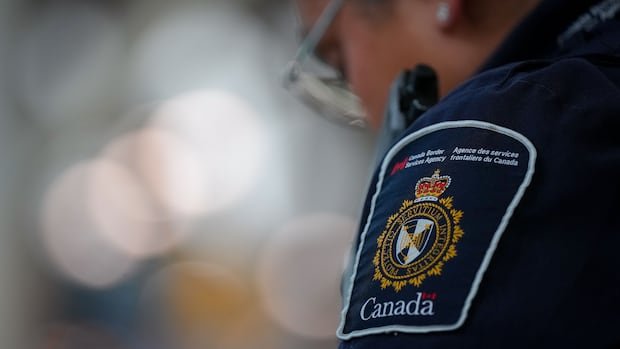

Canada’s border officers union leader has raised concerns about potential security risks due to the government’s shift towards automating the refugee claim process. The Canada Border Services Agency has strongly refuted these claims.
The focus of the debate lies on the CBSA’s One Touch intake system, which came under scrutiny after Mark Weber, the president of the Customs and Immigration Union, expressed worries about reduced human interaction at the border. The system, introduced in 2022 and now implemented nationwide, aims to handle “low-risk” claimants efficiently amid a surge in asylum seekers.
Previously, asylum seekers completed forms in the presence of an officer upon arrival, allowing for thorough scrutiny and verification. However, under the One Touch model, claimants undergo a quick initial risk assessment and provide biometric data. If flagged as low risk, they have 45 days to fill out forms online, which Weber criticized as insufficient for verifying claim authenticity.
Weber also highlighted that around 10% of claimants fail to complete the online forms, complicating tracking efforts for removal. This situation raises concerns about individuals evading detection and staying in Canada unlawfully.
In defense of the One Touch model, CBSA’s vice-president of intelligence and enforcement, Aaron McCrorie, emphasized the multi-layered defense approach in place. Claimants arriving at ports of entry undergo rigorous risk assessments and identity verification processes, including checks against security and law enforcement databases.
Despite the agency’s reassurances, Conservative immigration critic Michelle Rempel Garner expressed apprehensions about the system’s effectiveness and the potential gaps in the screening process. The government’s commitment to hiring 1,000 new border officers as part of its border security strategy aims to address these concerns and enhance border protection measures.