

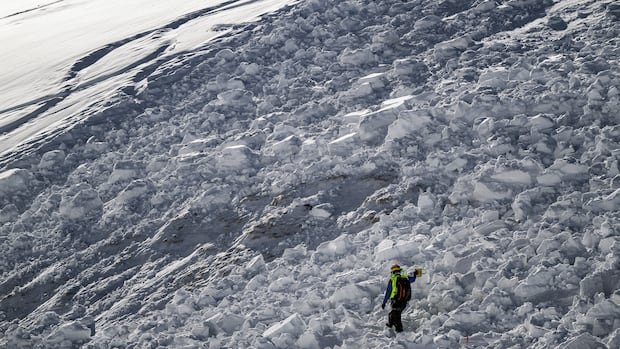

In February, a series of avalanches in British Columbia and Alberta resulted in the deaths of five individuals. During the same period, California and Utah witnessed over a dozen fatalities, with a tragic incident claiming nine lives in an avalanche. Across Europe, from Andorra to Slovakia, the current season has recorded 125 avalanche-related deaths.
These incidents underscore the constant risk associated with backcountry activities, even for experienced individuals well-prepared for avalanche hazards. The unpredictability of avalanche occurrences poses a significant challenge. CBC News consulted with three experts to delve into the formation of avalanches, their unpredictability, and the potential impact of climate change on their severity.
Avalanches are defined as snow masses moving visibly at speed, typically downhill. The critical factor leading to an avalanche is a strong layer resting on a weaker layer, triggered by external stressors. The timing and conditions of these layers’ formation are crucial, evident when analyzing a mountain snowpack’s composition. Despite appearing uniform, snow and ice exhibit dynamic properties, with their crystalline structure continuously evolving.
Various types of avalanches exist, ranging from loose sluffs to heavy, cohesive chunks, each requiring distinct triggers. ‘Slab’ avalanches, identified by Greene and Horton as the most hazardous, involve cohesive snow layers breaking off mountainsides. Predicting avalanches remains challenging due to the uniqueness of each event. Despite advancements in data collection, the variability of snowpacks even within short distances presents difficulties in accurate forecasting.
The impact of climate change on avalanches is a topic of concern. While the warming planet is likely influencing avalanche occurrences, the exact extent of this influence remains challenging to ascertain. Eckert highlights the significance of total precipitation and snow levels in understanding avalanche risks in a changing climate. The erratic weather patterns associated with climate change may contribute to the formation of weaker snowpack layers, potentially increasing risks for backcountry enthusiasts.
In conclusion, while enjoying outdoor activities in picturesque landscapes, individuals should prioritize safety measures such as staying informed with local forecasts, possessing appropriate gear, and undergoing avalanche safety training. Additionally, establishing clear rules within group dynamics and being prepared for unpredictable situations are crucial steps in reducing avalanche risks.