

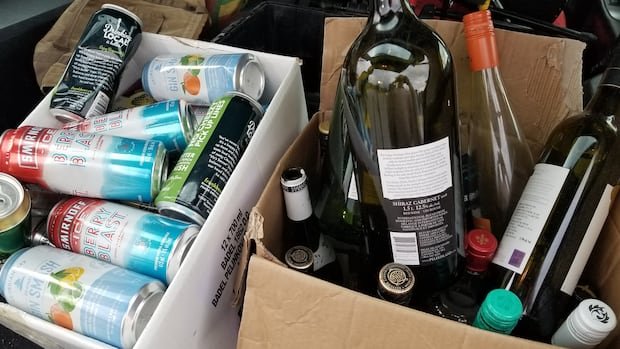

Ontario retailers and the Beer Store have come to a preliminary agreement on alcohol recycling that allows them to skip collecting empty containers at their outlets and gives brewers a renewed role, as per The Canadian Press sources. This agreement prevents a potential crisis for the Ontario Deposit Return Program, as some retailers had threatened to refuse taking back empties as mandated from January 1, the same day the Beer Store gains permission to shut an unlimited number of stores.
Although specific details are still being finalized, the key points of the agreement indicate that customers will still be able to return empty containers for refunds at Beer Store locations, with retailers covering the costs and brewers ensuring recycling points are available within a 10-kilometer radius for most residents. Beer Store’s president and CEO, Roy Benin, expressed positivity about the development, emphasizing the benefits for consumers and the environment.
Negotiations between brewers and retailers, facilitated by the government, have been ongoing for months after an initial deal between the government and the Beer Store aimed at accelerating Premier Doug Ford’s plan to expand alcohol sales to convenience and grocery stores. This deal required grocery stores beyond five kilometers from a Beer Store to accept empty returns, a condition extended to all alcohol-selling grocers starting January 1. Many retailers were not complying and had threatened to cease alcohol sales if the program wasn’t improved, jeopardizing Ford’s expansion plans.
The recent agreement-in-principle has been welcomed by Finance Minister Peter Bethlenfalvy’s spokesperson, Colin Blachar, who sees it as a victory for businesses and consumers, contributing to the modernization of Ontario’s alcohol market and enhancing choice and convenience for residents. The earlier agreement to hasten alcohol expansion included a $225 million payment to the Beer Store during the transition and allowed the closure of numerous locations, raising concerns about the future of the Beer Store.
This new agreement reinforces the Beer Store’s role in alcohol container recycling, potentially preventing mass closures from January 1. However, it remains uncertain if some closures will continue or if the Beer Store will consider reopening closed or new locations to fulfill its 10-kilometer commitment. Grocery stores, relieved at the resolution, stand to benefit from the simplified and reliable alcohol container recycling system, as acknowledged by the Retail Council of Canada’s president and CEO, Kim Furlong.
While the exact costs to retailers are yet to be determined, it remains unclear if they will pass these expenses on to consumers. Gary Sands, senior vice-president of public policy and advocacy at the Canadian Federation of Independent Grocers, highlighted the additional costs independent and small grocers would have faced to comply with the empty container collection requirements, emphasizing the importance of this agreement in maintaining licenses and promoting consumer choice and convenience.
Convenience stores remain exempt from the recycling obligations.