

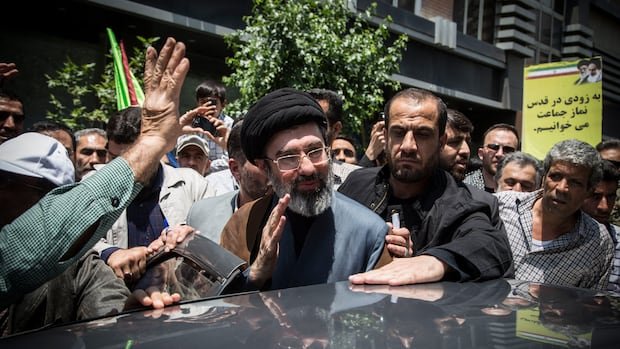

Iran announced on Monday that Mojtaba Khamenei will take over as the new supreme leader, succeeding his late father, Ali Khamenei. This move solidifies the dominance of hardliners in Tehran amid ongoing tensions with the United States and Israel. Mojtaba, born in 1969 in Mashhad, Iran, experienced the Iran-Iraq war and received religious education in Qom. Despite not holding any formal government position, he is considered a key figure within the Islamic republic. Critics question his credentials and challenge the notion of dynastic succession in Iran.
Having strong ties to influential clerics and the Islamic Revolutionary Guard Corps (IRGC), Mojtaba wields significant power in Iran’s political and security structures. He has been described as a hardliner who opposes engagement with the West, particularly on nuclear issues. Mojtaba’s appointment has faced criticism, with some viewing him as more hardline than his father. The U.S. Treasury Department sanctioned him in 2019 for his involvement in advancing his father’s regional and domestic objectives.
Protesters have targeted Mojtaba in the past, especially during unrest over human rights violations in Iran. His role in overseeing security forces has drawn ire from dissenting voices. Despite international scrutiny and opposition, Mojtaba Khamenei’s ascension to supreme leader marks a significant development in Iran’s political landscape.