


Jennifer Cooper stumbled upon her first vertical drama while browsing TikTok. The advertisement showcased a melodramatic series revolving around a woman seeking revenge on her unfaithful boyfriend and his harsh family by seducing his affluent uncle. Reminiscent of Chinese dramas she had watched, Cooper eagerly consumed the brief episodes before investing in the full story.
The narrative concluded with the woman finding love and triumphing over her toxic family. Intrigued by these billionaire romances, authoritative bosses, and vengeful vampire tales, Cooper delved into reviewing and creating content about similar series online.
Microdramas, offering exaggerated stories in one- to two-minute segments in a vertical format, have become a phenomenon accessible on various apps, heavily promoted on platforms like TikTok. While each video is short, the entire storyline unfolds across numerous segments akin to a segmented movie.
Despite the predictable plots, these videos have garnered substantial attention, attracting interest from Canadian producers and talent venturing into this new storytelling medium.
The microdrama trend, flourishing in Asia, has gained traction in North America. Elaine Low, a TV journalist, draws parallels between this format and Quibi, a short-form video platform that faltered in North America but thrived in China. The microdrama industry in Asia amassed a staggering $7 billion in 2024, surpassing box office revenue. Japan and South Korea have also embraced this trend, with the global microdrama industry projected to reach $9.5 billion by 2030.
Even Hollywood studios are recognizing the potential of microdramas. Companies like Fox have collaborated with microdrama creators, and vertical production entities like DramaBox have secured investments and partnerships with industry giants like Disney.
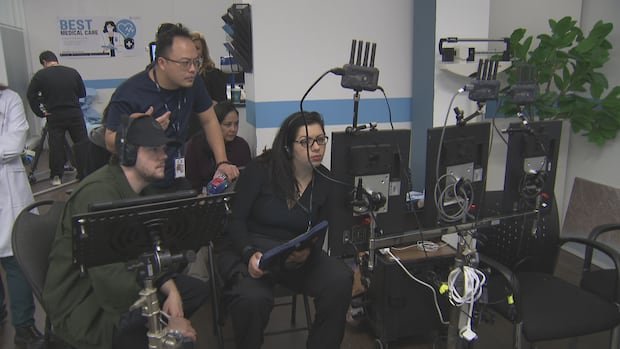
Samantha MacAdams, a director transitioning to microdramas, acknowledges the medium’s growing prominence, particularly among younger audiences consuming content on their smartphones.
While microdramas have gained popularity in Canada, the industry’s compensation and quality standards remain debatable. Actors like Evan Bacic have found consistent work in vertical dramas but note the lack of unionization, leading to concerns about wages and safety on set.
Kate Ziegler, president of ACTRA Toronto, highlights ongoing efforts to establish guidelines for microdrama productions, emphasizing fair pay, safety protocols, and the inclusion of diverse talent. Despite criticisms of the genre’s writing and acting quality, industry professionals like Tim Zhou believe that with time and practice, microdramas will evolve into a significant player in the entertainment landscape.
In conclusion, microdramas are reshaping the entertainment industry, offering a new platform for storytelling that is gaining momentum globally. As creators and audiences navigate this evolving landscape, the future of microdramas holds promise for innovative and diverse storytelling.