

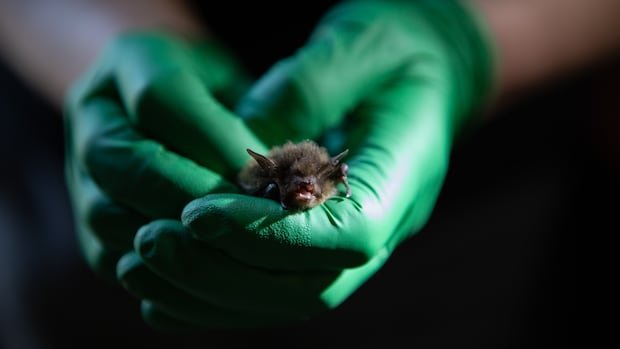

As evening descends upon a vast estate in Snohomish County, Washington state, a team of around twelve volunteers gathers around Abby Tobin, a scientist from the Washington State Department of Fish and Wildlife. Tobin mentions that the bats will soon become restless. The volunteers receive instructions from Tobin, with their task being to capture as many bats as possible to detect signs of the fungus causing white-nose syndrome that has been devastating bat populations in eastern North America for approximately 15 years.
The fungus, known as Pseudogymnoascus destructans, infects bats’ skin, leading to disrupted hibernation, dehydration, starvation, and eventual death. However, scientist Cori Lausen, also known as the Bat Lady, believes that a probiotic formula could potentially save the bats from this deadly fungus.
White-nose syndrome has resulted in the death of over six million bats in eastern North America since 2006. Anouk Simard, a biologist from Quebec’s Ministry of the Environment, the Fight Against Climate Change, Wildlife, and Parks, mentions a drastic decline in bat populations in Quebec due to the syndrome.
Bats are crucial for controlling pests naturally, with one bat capable of consuming up to its body weight in insects in a single night. This natural pest control helps reduce the need for pesticides, saving farmers money, decreasing pollution, and enhancing food security.
A study published in the academic journal Science in 2024 suggests that regions affected by white-nose syndrome may experience an eight percent increase in human infant mortality due to the potential rise in pesticide use as bat populations decline.
Aside from white-nose syndrome, habitat loss attributed to deforestation and the impact of wind turbines on migratory bats pose additional threats to bat populations. Lausen remains determined to safeguard the bats from these threats.
In preparation for winter, Lausen is applying a probiotic “cocktail” near Stave Lake, 40 kilometers from the U.S. border, to protect bats from the fungus. The cocktail consists of four bacterial strains that naturally suppress the fungus, potentially aiding in the bats’ defense.
Research is ongoing to determine the effectiveness of the probiotic treatment. Lausen remains optimistic about the initial results, indicating that the probiotic may assist bats in combating the fungus.
In Snohomish County, American researchers are testing the effectiveness of Lausen’s probiotic cocktail on bats. Bats are being examined for signs of white-nose syndrome and traces of the probiotic cocktail to assess the treatment’s impact.
Despite the challenges in monitoring bat populations in the west, efforts are being made to protect them from the deadly effects of white-nose syndrome. The volunteers work diligently to capture bats for analysis, aiming to understand and mitigate the threat posed by the fungus.
Lausen emphasizes the importance of identifying a treatment promptly to prevent the potential loss of western bat populations without detection. Western bats’ tendency to hibernate in secluded locations makes them challenging to locate and monitor effectively, posing a significant challenge in combating white-nose syndrome.