

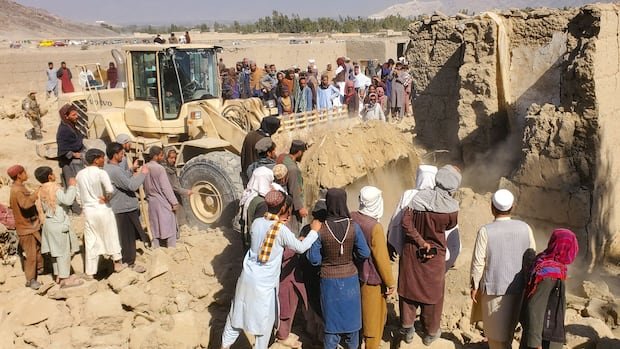

Pakistan conducted strikes along the Afghanistan border early Sunday, targeting hideouts of Pakistani militants responsible for recent attacks in Pakistan. The Afghan Red Crescent Society reported more than a dozen casualties.
Although Pakistan did not specify the exact locations, the Afghan Defence Ministry stated that the strikes hit various civilian areas in Nangarhar and Paktika provinces, including a religious school and multiple homes, violating Afghanistan’s airspace and sovereignty.
According to Afghan government spokesperson Zabihullah Mujahid, the attacks resulted in casualties, including women and children. The Afghan Red Crescent Society confirmed 18 fatalities and several injuries.
Pakistan’s information minister, Attaullah Tarar, stated that the military carried out “intelligence-based, selective operations” against seven camps of the Pakistani Taliban and its affiliates, along with targeting an Islamic State affiliate. While emphasizing Pakistan’s commitment to regional peace and stability, Tarar highlighted the paramount importance of ensuring the safety of Pakistani citizens.
Militant violence in Pakistan has surged in recent years, primarily attributed to the Tehrik-e-Taliban Pakistan (TTP) and outlawed Baloch separatist groups. The TTP, closely linked to Afghanistan’s Taliban, faces accusations from Islamabad of operating from Afghan soil, a claim denied by both the group and Kabul.
Before the Pakistani strikes, a suicide bomber attacked a security convoy in Bannu, killing two soldiers. Following this incident, Pakistan’s military vowed to continue operations against the perpetrators without restraint.
Another suicide bomber, supported by gunmen, targeted a security post in Bajaur district last week, resulting in the deaths of 11 soldiers and a child. Pakistani authorities later identified the attacker as an Afghan national.
Tarar asserted that Pakistan possessed evidence linking recent attacks, including a deadly mosque bombing in Islamabad, to militants acting under the direction of leaders based in Afghanistan. Despite Pakistan’s repeated calls for action, he claimed that Afghanistan’s Taliban had not taken substantial measures to prevent cross-border attacks.
Additionally, Tarar urged the international community to press Afghanistan’s Taliban to honor their commitments under the Doha agreement, emphasizing the prevention of Afghan territory from being used as a launchpad for attacks on other nations.
The ceasefire between Afghanistan and Pakistan, brokered by Qatar, followed border clashes in October that led to casualties on both sides. Despite several rounds of unsuccessful talks in Istanbul, the ceasefire has generally held, but diplomatic relations between the two countries remain strained.