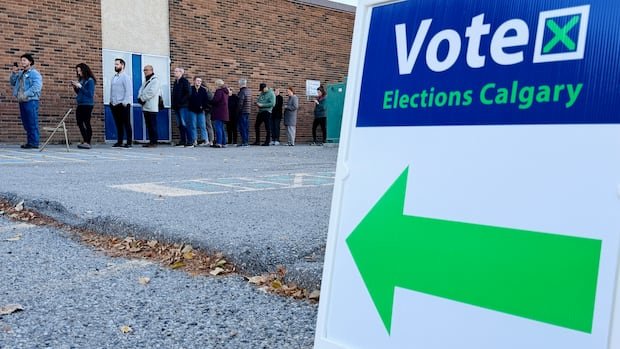

According to political experts and Calgary’s returning officer, changes in provincial legislation are being identified as the cause of lengthy queues and slow processing during municipal elections throughout Alberta on Monday.
One of the alterations introduced last autumn requires municipalities to establish and maintain permanent lists of eligible voters, known as electors registers.
In Calgary, voters had until August 27 to pre-register for the list, with additional voter information received from Elections Alberta by the city.
Individuals not listed had to complete a form at the polling stations, providing personal details such as full name, address, birthdate, and a signed declaration.
These procedures resulted in delays, with voters questioning the purpose of the paperwork and how the information would be utilized. Some polling locations experienced queues lasting over three hours.
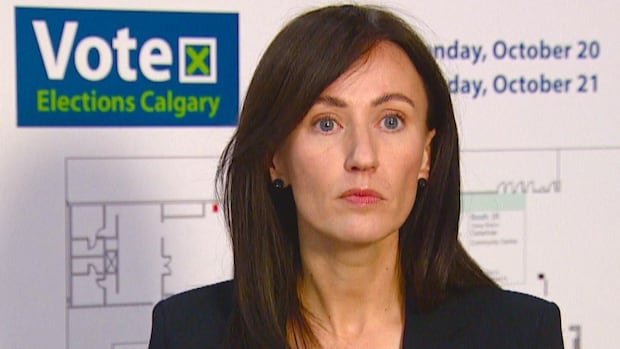
During a news briefing on Tuesday evening, Calgary returning officer Kate Martin recognized that the new provincial regulation contributed to the increased paperwork at the polls.
Martin explained that workers were required to either verify individuals against the permanent electoral register or issue a Form 13 — an electoral register — when necessary.
If a voter was already registered, they were not obligated to sign the form’s statement, but the worker still needed to complete the information. However, any voter requesting a school trustee ballot had to fill out and sign the form, even if already listed.
Updates were necessary if there were changes in a voter’s name or address.
“Each of these small steps contributed to extended processing times,” Martin stated.
Some Calgary voters faced long waits at polling stations on Monday. Returning officer Kate Martin says election workers had to handle the permanent electoral register, as well as issue three paper ballots in addition to the new provincially-mandated forms.
Martin emphasized that the forms would be used in compiling Calgary’s permanent electors list, which will also be shared with the province, as confirmed by the city to CBC News.
How will the data be utilized?
Prior to these changes, municipalities could establish their own voter lists based on individuals appearing at polling stations, as per an associate professor of political science at MacEwan University in Edmonton.
Brendan Boyd suggested that the province is aiming to implement a consistent, permanent approach across Alberta.
“I believe the objective is to formalize the eligibility of voters and verify their identity to reduce fraud,” Boyd explained.