

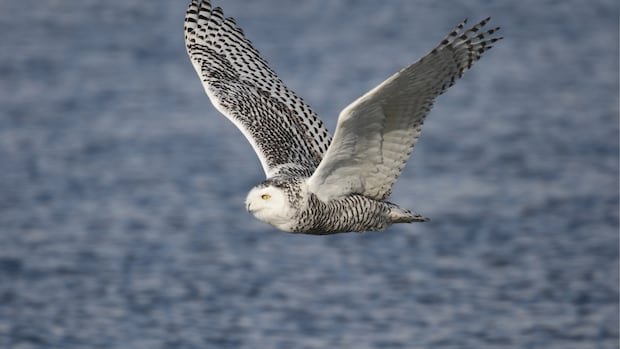

The population of snowy owls soaring over the Arctic landscape is dwindling due to various threats, with the iconic birds facing challenges in obtaining legal protection. Habitat loss and difficulties in finding prey due to thicker ground cover pose significant risks to these birds. Additionally, collisions with vehicles, buildings, and power poles during migration are contributing to the decline in their numbers.
The current population of snowy owls stands at approximately 14,000, decreasing by over 30% per decade. The species was classified as threatened due to the rapid decline in its population, as noted by Syd Cannings, a retired biologist who was part of the Committee on the Status of Endangered Wildlife in Canada.
Despite scientific assessments indicating a decline in population, legal protection is not automatically triggered. Various stakeholders, including researchers, federal, Indigenous, and local governments, engage in extensive consultations on conservation efforts once a species is identified as threatened. This process can stretch over two years or more, leaving the snowy owl vulnerable during this period before conservation measures can be put in place.
The lengthy process of formal legal listing under federal law can take two years or more after a species is deemed threatened. According to Cannings, this cautious approach by the government aims to consider the implications on various stakeholders before making decisions that could impact them.
The snowy owl serves as an umbrella species and an environmental health indicator, reflecting the well-being of surrounding flora and fauna. Therefore, the declining population of snowy owls may signify broader ecological challenges beyond just the bird species.
Consultations regarding the snowy owl’s status are ongoing within the federal government, with the environment minister presenting the assessment report to the cabinet for a final decision. The Species at Risk Act outlines a multi-step process, with the assessment by the committee being the initial phase.
The primary threat faced by snowy owls is the gradual alteration of their habitat due to global warming, leading to changes in food availability and nesting grounds. Other dangers include avian flu outbreaks, collisions with man-made structures, electrocution from power lines, and poisoning from consuming prey exposed to rodent poison.
Addressing the decline in snowy owl populations is a complex challenge, as it involves multiple interconnected factors influenced by global issues such as climate change. Efforts to protect these birds require a comprehensive understanding of the ecological dynamics at play and collaboration among various stakeholders to mitigate the threats faced by the species.