

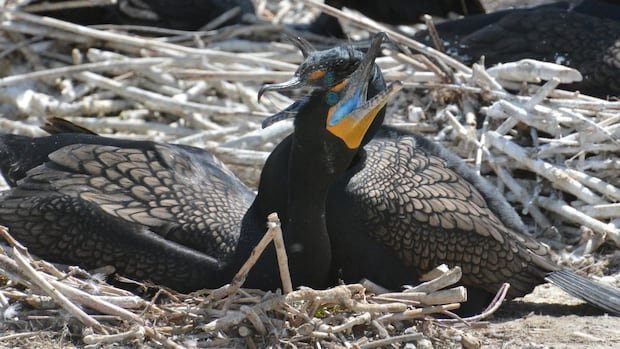


Double-crested cormorants are creating issues on the Toronto islands, with their widespread excretion affecting the environment. Their acidic droppings are damaging trees and prompting concerns among island residents and authorities.
Warren Hoselton, a former park supervisor on the islands, expressed distress over the worsening situation caused by the cormorants’ presence. The population of these birds, particularly at Hanlan’s Point, has surged, leading to calls for their relocation.
The impact of the cormorants can be seen in the transformation of once lush shorelines into dystopian-like scenes due to the accumulation of their waste, known as guano. This environmental challenge has sparked debates on the management of these birds.
Gordon Ballantyne, the general manager at the Toronto Island Marina, highlighted the decline in visitor numbers attributed to the inconveniences caused by the cormorants. Efforts to address the situation involve strategies to deter the birds from nesting in trees.
The origin of the cormorant population on the Toronto islands traces back to a potential exodus from another colony at Tommy Thompson Park. Factors such as predation risks may have influenced the birds’ decision to relocate to the islands.
Management approaches include non-lethal methods, as bylaws prevent the shooting of cormorants within city limits. The Toronto and Region Conservation Authority is actively involved in managing the cormorant population to minimize environmental harm while preserving biodiversity.
Why Protect Cormorants?
Despite the challenges posed by cormorants, some advocate for their conservation due to their native status and ecological significance. Research suggests that cormorants play a complex role in ecosystems, indicating the importance of balanced conservation strategies.
Proposed solutions to address the issues caused by cormorants include habitat adaptation and management efforts. Initiatives such as creating alternative nesting sites and employing deterrence methods aim to mitigate conflicts between human activities and cormorant habitats.
As ongoing discussions and actions unfold, the future of cormorants on the Toronto islands remains a subject of debate and adaptive conservation measures.