

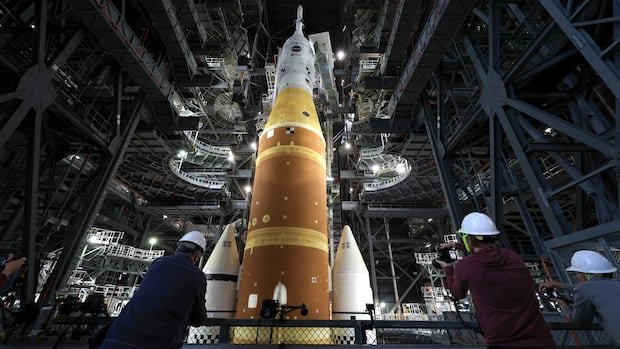

The planned launch of the Artemis II mission on February 8 has been postponed by at least a month due to a hydrogen leak discovered by NASA during the tank fueling process. This delay mirrors the challenges faced by the first Artemis mission, which also encountered delays related to fuel leaks.
The unique properties of liquid hydrogen and liquid oxygen, the components of rocket fuel, make them prone to leaks despite being extremely cold substances. With boiling points of -253°C and -183°C respectively, these cryogenic liquids require specialized equipment to prevent freezing and cracking in the warm Florida launch environment.
To maintain the fuels in liquid form, insulation is crucial to counteract the heat of the surroundings. The orange color of the Space Launch System (SLS) rocket’s core stage is due to insulating foam protecting the cold fuel. However, the cryogenic fuel’s vapor pressure leads to leaks, especially with hydrogen, known for its ability to escape through tiny openings.
Storage tanks near the launch pad feed fuel through the launch tower and hoses, highlighting multiple potential leak points. The recent issue during a wet dress rehearsal stemmed from a connector at the launch tower, similar to a previous incident on Artemis I that caused substantial delays.
Engineers aim to address the current leak at the launch pad to avoid returning the rocket to the Vehicle Assembly Building, potentially expediting the launch set for no earlier than March 6. While hydrogen leaks remain a challenge, NASA persists in using this fuel due to its high thrust-to-weight ratio, beneficial for heavy lift missions.
Critics question the sustainability of the SLS rocket due to its high operational costs and disposable nature, contrasting with reusable rockets used by private companies like SpaceX. The future of the SLS rocket hinges on resolving hydrogen leaks while considering the economic viability of its operations and the impact on job retention within the industry.