

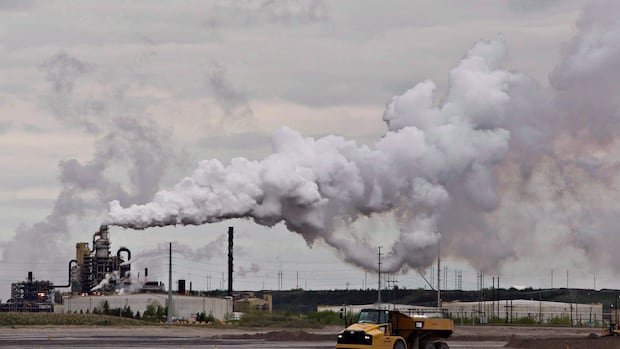

After extensive speculation, the federal government has indicated a move to eliminate the oil and gas emissions cap, accompanied by certain conditions. While not explicitly stating the removal of the controversial Trudeau-era proposal, Tuesday’s budget outlined specific prerequisites for its discontinuation.
The budget emphasized that the implementation of “effective” carbon pricing, strengthened methane regulations, and the widespread adoption of carbon capture and storage on a large scale would render the oil and gas emissions cap redundant in emission reduction efforts. This conclusion was presented in “Canada’s Climate Competitiveness Strategy,” introduced in the 2025 budget by the Carney government.
Finance Minister François-Philippe Champagne highlighted this new approach to the emissions cap during a pre-budget news conference, stating that once specific conditions are met, the cap would no longer be necessary. However, he emphasized that these conditions must be fulfilled for the cap to be lifted.
The strategy unveiled by Prime Minister Mark Carney’s new Liberal government affirmed its intention to uphold certain climate policies from the previous administration, including clean electricity regulations, finalization of methane regulations, and clean fuel regulations. The budget did not commit to proceeding with Canada’s 2035 electric vehicle sales mandate, instead indicating that further steps would be announced in the upcoming weeks.
Notably, the strategy emphasized industrial carbon pricing, with provinces like Ontario, Saskatchewan, and Alberta already having systems meeting federal standards. The government pledged to increase the carbon price to $170 per tonne by 2030 and aims to secure a “pan-Canadian agreement” on achieving net-zero emissions by 2050.
Conservative Leader Pierre Poilievre criticized the proposed industrial carbon price hike as a tax increase, particularly targeting farm equipment, fertilizer, steel, and concrete. Alberta Premier Danielle Smith expressed cautious optimism regarding the federal government’s conditional decision to withdraw the emissions cap, citing ongoing negotiations between the federal and provincial governments.
The strategy focuses on incentivizing companies to invest in emissions reduction initiatives rather than imposing prohibitions. Natural Resources Canada will establish a critical minerals sovereign fund with $2 billion over five years to facilitate investments in battery storage, wind and solar energy expansion, and interprovincial interties for low-carbon electricity distribution.
Additionally, the budget outlined plans to update “greenwashing legislation” to combat false environmental claims and introduced measures to address the climate crisis, such as the proposed Youth Climate Corps initiative and tax system changes benefiting low-carbon liquefied natural gas facilities. Green Party Leader Elizabeth May criticized these measures as fossil fuel subsidies and expressed intent to vote against the budget unless amended.