


The federal government is currently in conflict with over 1,000 federally appointed judges regarding the resolution of a salary dispute, raising alarm among legal and political circles that this issue could damage the judiciary’s image.
Last year, the government declined to approve a proposed salary hike of $28,000 to $36,000 put forward by an independent committee.
Judges awaiting a pay increase presently have salaries ranging from $398,000 to $510,000 annually.
Two judicial associations have taken legal action, claiming that Ottawa failed to sufficiently explain its reasoning for dismissing the salary recommendations from the Judicial Compensation and Benefits Commission.
“This whole application represents a significant miscalculation on the part of the judges,” remarked Adam Dodek, a law professor at the University of Ottawa.
“At a time when public judges face criticism and have fewer supporters, this misguided challenge is likely to further erode public faith in the justice system.”
The Federal Court has scheduled hearings on this issue for September, following a number of disputes regarding the appropriate venue and judge for the case.
-
Judges’ association taking federal government to court over rejection of $28K raise
-
Federal judges deserve $28K-$36K salary hike, panel rules
In February, the Canadian Superior Courts Judges Association proposed referring the case to the Supreme Court. However, Ottawa opted not to seek the opinion of the highest court in a process known as a reference.
In a communication to the Federal Court, Ottawa later suggested that a retired judge should preside over the case.
The government stated that this approach would “address any reasonable public concerns regarding bias” that might arise from a judge making a ruling on their own compensation.
The association opposed this suggestion, asserting that Ottawa should have officially filed a recusal request and clearly demonstrated that a sitting judge would be facing a conflict of interest. They pointed out that the proposed salary increases would also impact appellate judges, including those on the Supreme Court of Canada.
Ultimately, the Federal Court sided with the government, appointing former judge Alexandra Hoy to oversee the case this fall. She retired from the Ontario Court of Appeal in 2023.
-
Some provinces want more say in appointing judges. What does Canada’s chief justice think?
-
Chief justice says rule of law, judicial independence protect Canada from autocracy
Dodek, who previously served as dean of the University of Ottawa’s common law faculty, is advising judges to withdraw from the case, simplifying the issue to “judges deciding on judges’ pay.”
Trevor Farrow, the dean at Osgoode Hall Law School in Toronto, commented that both the government and the judges must navigate this situation with caution to preserve the integrity of a vital democratic institution.
“This puts judges in a difficult position, it forces the government to defend its stance, and it places the public in a challenging position to make sense of it,” Farrow noted.
“What is truly at stake here is the perception of justice, confidence in the judiciary, and faith in the rule of law.”
The Bloc Québécois expressed concern that the federal judiciary is in a position of being both “judge and party” in this conflict with the federal government.
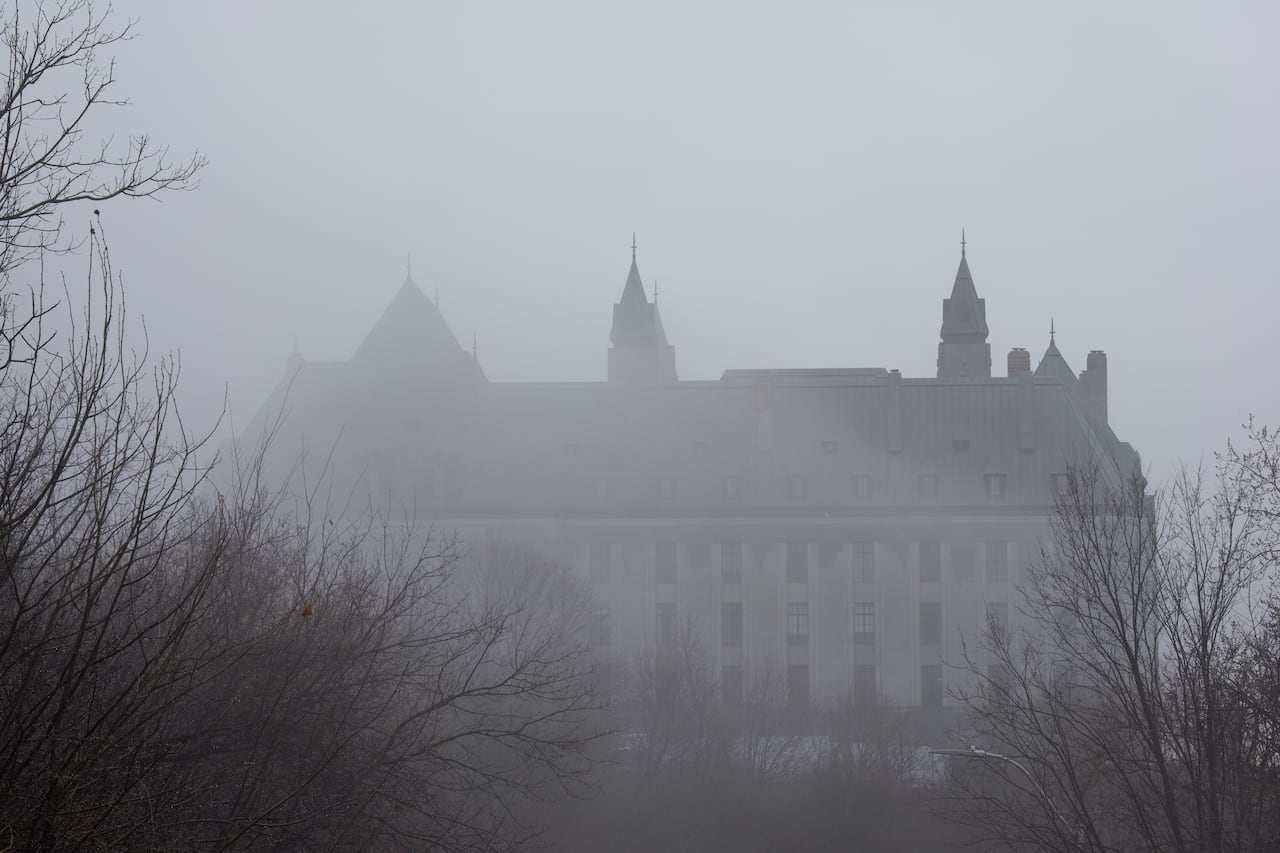
The Canadian Superior Courts Judges Association suggested sending the case to the Supreme Court. It will instead be heard by a retired judge. (Adrian Wyld/The Canadian Press)
“I feel very uneasy about this situation,” stated Bloc Québécois MP Rhéal Fortin.
Fortin criticized the federal government’s rejection of the review commission’s findings while also condemning the judiciary’s decision to pursue the matter in court.
“People observing this will raise serious doubts about the trust we should place in our justice system,” Fortin remarked.
The Bloc Québécois has suggested that the issue be resolved within the House of Commons.
The Conservative Party did not provide a response to a request for comment before the deadline.
‘Choose the appropriate timing and cause wisely’
Since its inception in 1999, the review commission has been tasked with safeguarding judicial independence, which encompasses the independent determination of judges’ salaries.
Nevertheless, as Patrick Taillon, a law professor at Université Laval in Quebec City, stated, “the ultimate authority to decide, in Canada and in the British tradition, has always resided with the government.”
“[The associations] possess the right to instigate a judicial discussion on this matter, but it is crucial to select the right timing and cause thoughtfully.”
Taillon indicated that Ottawa is likely aware that the public may not support significant salary increases for federal judges given the current economic climate.
“The federal government has little incentive to expedite the process,” he remarked.
-
Manitoba Court of King’s Bench Chief Justice Glenn Joyal nominated to Supreme Court of Canada
-
Canada’s top justice says tight resources are delaying trials, harming judges’ health
According to the Canadian Superior Courts Judges Association and the Association of Associate Judges of the Federal Courts, the government did not provide a solid justification for denying the salary increase aimed at attracting superior candidates for judicial positions.
The two associations represent the majority of judges eligible for the raise. However, justices of the Supreme Court of Canada, for instance, are not included among those challenging the legal decision.
From the government’s perspective, it would have been reckless to raise judges’ pay during a time of economic instability and a trade dispute with the United States.
In light of this situation, Ottawa stated that judges should be content with the standard salary indexation process.
The Harper administration also turned down the review commission’s recommendations back in 2006, citing economic conditions as the reason. At that time, both judges and the government reached an agreement to postpone the salary increases until the next consultation cycle, which occurs every four years.