

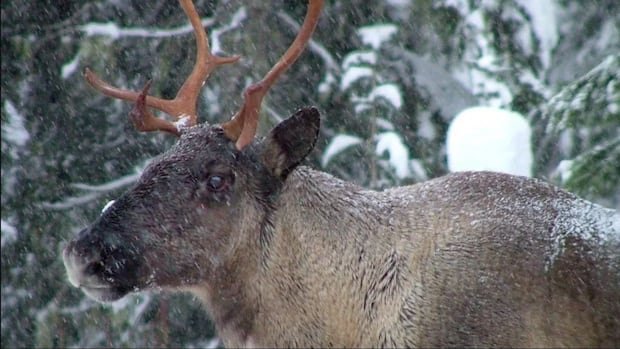

Mike James is eagerly anticipating the arrival of his first grandchild, whose gender is still a mystery. He envisions a future where they can witness the majestic southern mountain caribou during visits to the family cabin near Quesnel Lake.
Known for their snowshoe-like hoofs that enable them to forage on lichens in high-altitude regions of ancient forests, the southern mountain caribou, also referred to as deep snow caribou, primarily inhabit eastern British Columbia. The territory extends from the north-central areas of the province southward, with some scattered populations in western BC and along the U.S. border.
However, extensive logging activities over the years have decimated their habitat, resulting in a dwindling population of fewer than 1,400 individuals spread across 18 herds, according to 2023 government statistics. Approximately 200 of these caribou are estimated to roam near James’ family cabin, raising concerns about their future following the approval of logging operations by West Fraser Timber in the area against the advice of the Ministry of Water, Land, and Resource Stewardship.
Expressing disbelief at the situation, James criticized the decision, likening it to a scenario of the wolf guarding the hen house. Designated as a threatened species under Canada’s Species at Risk Act since 2003, southern mountain caribou face significant risks due to habitat disturbances caused by logging activities.
A memo from July 2025, obtained by a group of residents from the Ministry of Water, Land, and Resource Stewardship, highlighted the adverse effects of logging on caribou habitats. The memo warned that logging activities would encroach upon crucial habitats used by caribou herds for sustenance, calving, and protection from predators.
The authors of the memo questioned the accuracy of data provided by West Fraser, expressing concerns about the potential expansion of disturbances caused by the proposed logging permits. Despite these warnings, the Ministry of Forests proceeded to issue a permit for logging in one of the identified areas, leading to visible logging activities captured in satellite images from early May.
Environmental advocates, including Lucero Gonzales from the Wilderness Committee, criticized the Ministry of Forests for prioritizing industry interests over species protection. Gonzales raised concerns about the lack of accountability in safeguarding endangered species like the southern mountain caribou, emphasizing the need for stricter conservation measures.
Responding to the backlash, the Ministry of Forests defended its decision-making process, citing various factors considered before issuing cutting or road permits, including public safety and expert consultations. The Ministry of Water, Land, and Resource Stewardship acknowledged its collaboration with the Ministry of Forests but stressed the importance of preserving species at risk and maintaining a balanced approach to land management.
Calls for a halt to logging in caribou habitats have intensified, with James advocating for a permanent ban on logging activities to allow the caribou population to recover. He emphasized the importance of preserving the natural habitat to ensure future generations, including his grandchildren, have the opportunity to witness the beauty of southern mountain caribou in the wild.