

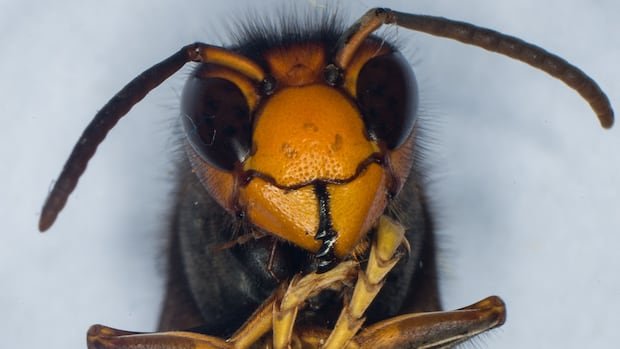

British Columbia agriculture officials have been in communication with their counterparts in Washington state following the discovery and elimination of a yellow-legged hornet at a cargo port in Vancouver, Washington. The Washington State Department of Agriculture reported that the hornet, also known as the southern giant hornet and native to Asia, was found by a grain inspector inspecting a cargo ship on April 30.
Considered an invasive species in both Canada and the U.S., yellow-legged hornets pose a significant threat to honey bee populations. While the Washington state officials promptly dealt with the hornet and subsequent inspections showed no further presence of hornets on the ship, B.C. officials are closely monitoring the situation.
A spokesperson for the Agriculture Ministry mentioned that the risk of the hornet spreading into British Columbia is low, as advised by the Washington State Department of Agriculture. They assured that communication channels are established at federal and local levels to respond swiftly if a similar incident occurs at a B.C. port.
The yellow-legged hornet has spread rapidly in Europe, leading to a 30% decline in honey bee hives and honey production. Sven Spichiger, a pest program manager at the WSDA, expressed hope that the interception was an isolated incident typical at ports.
The U.S. Department of Agriculture described the yellow-legged hornet as constructing nests above ground using paper-like materials and feeding on various insects, including honey bees. The department warned that if these invasive pests establish in the U.S., they could endanger domestic and feral honey bee populations and native pollinators.
Residents in the Vancouver, Washington area were urged to be vigilant for additional yellow-legged hornets distinguished by their markings. In 2024, the B.C. government successfully eradicated the northern giant hornets, commonly known as “murder hornets,” which had raised concerns due to their rapid destruction of bee colonies.
Alison McAfee, a post-doctoral fellow at the University of B.C., emphasized the potential risks associated with shipping cargo and pests. She highlighted the inevitability of pests dispersing through global trade and establishing in new areas with suitable resources and climates.
The ongoing collaboration and vigilance between Washington state and British Columbia authorities aim to prevent the spread of harmful pests like the yellow-legged hornet and safeguard local ecosystems.