

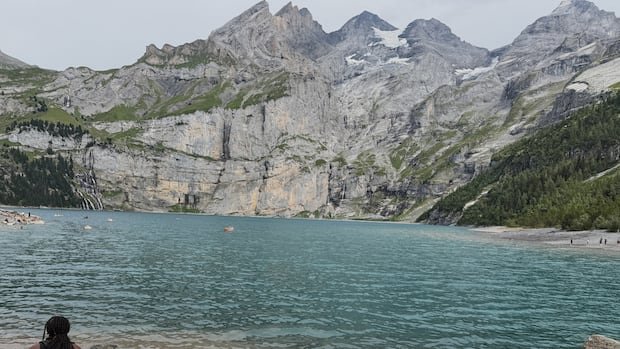

Glaciers in Switzerland, known for hosting the most in the Alps, have experienced a 5.5% decline in ice volume this year — marking the second-largest drop on record. This significant loss is attributed to heat waves and reduced snowfall during the winter, as highlighted by experts from the GLAMOS Swiss glacier monitoring service and Swiss Academy of Sciences.
The concerning trend of glacier shrinkage has been escalating in recent years, with a nearly 20% decrease in ice volume in Switzerland over the past five years alone. This alarming report underscores the growing impact of global warming on Europe, which is currently the fastest-warming continent.
Matthias Huss, the head of GLAMOS, emphasized the detrimental effects of low snowfall on glaciers, pointing out that snow plays a crucial role in protecting the ice from melting and providing essential resources for glacier sustainability. The diminishing snow cover exacerbates the ice loss, contributing to the accelerated decline witnessed in Switzerland.
The repercussions of accelerated glacier melting extend beyond Switzerland, with global warming destabilizing glaciers in various regions, such as the recent collapse in the Himalayas that triggered devastating floods in Nepal. The visible shrinkage of glaciers in Greenland and Antarctica further illustrates the widespread impact of climate change on glacier stability worldwide.
In Switzerland, while the absolute volume lost this year is lower than in 2003, the percentage decline is more significant due to the overall reduction in ice volume over the years. The current state of Swiss glaciers reflects a concerning reality, with experts warning that immediate action to reduce CO2 emissions is crucial to mitigate further glacier loss.
The severe melting observed in Switzerland this year has resulted in a substantial loss of water, equivalent to four times the country’s annual water consumption. Given Switzerland’s role as the water source for Europe, the accelerated glacier melt poses significant challenges for water resources and river systems across the continent.
Glaciers such as Allalin, Clarident, Rhone, and Aletsch, the largest in the Alps, have experienced unprecedented melting this year. While efforts to stabilize the climate and reduce emissions are crucial, Huss acknowledges that saving the Swiss Alps glaciers may be a daunting task. However, he emphasizes the urgency of taking action to preserve polar ice sheets to mitigate the risk of rising sea levels, which pose a significant threat to coastal communities worldwide.