

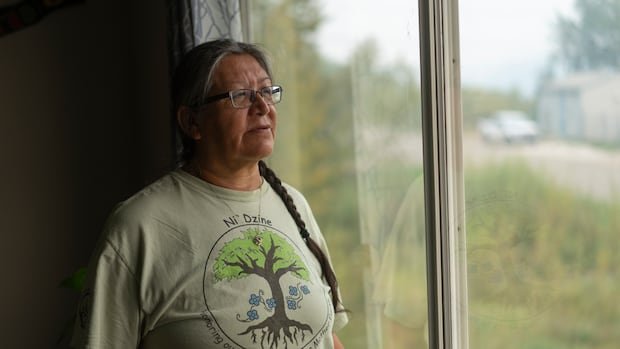

From her residence in Fort McKay, Jean L’Hommecourt often observes a haze of thick dust looming over the horizon towards the Athabasca River. The sky takes on a dull brown hue due to sheets of blowing grit, a sight common in this community nestled within the oilsands area about 55 kilometers north of Fort McMurray, Alberta, surrounded by surface mines and industrial activity.
Describing the scene, L’Hommecourt, a former environmental manager for the Fort McKay First Nation and a seasoned traditional land use researcher, noted, “Looking north, the sky is discoloured. You can see it drifting up from the mines. The wind, you can’t escape it.”
A recent study published in Atmospheric Pollution Research revealed that Fort McKay experiences significantly elevated levels of dust pollution, often surpassing regulatory air quality thresholds. The research, led by University of Toronto PhD candidate Kristin Iorio in collaboration with independent researchers in Alberta, highlighted the community’s struggle with severe dustfall events driven by large dust particles that settle over the area in intense but brief peaks, evading traditional monitoring methods.
The study, spanning 24 months, analyzed data collected between late 2022 and mid-2025 by the Wood Buffalo Environmental Association and the Fort McKay Sustainability Department. Utilizing various tools like dustfall buckets and ambient air quality samplers, researchers assessed dust exposure in six communities, with Fort McKay consistently recording the highest dustfall levels compared to other locations.
Unlike the regulation of PM2.5 levels in Alberta, which focuses on fine particulate matter, there are no specific rules for particles larger than 10 micrometres (PM10), such as the coarse dust prevalent in industrial areas, construction sites, and mines. This regulatory gap poses challenges in monitoring and addressing the health impacts of larger dust particles.
To address these gaps, the study recommends establishing updated air quality objectives for PM10 contamination and enhancing monitoring efforts in Fort McKay to track dust sources and alert residents during high pollution events. Experts emphasize the need for continuous monitoring and revised guidelines to address the episodic nature of industrial pollution and its potential health implications.
While concerns persist about the community’s air quality, further research and enhanced monitoring are crucial to understand and mitigate the impact of dust pollution on Fort McKay residents.