

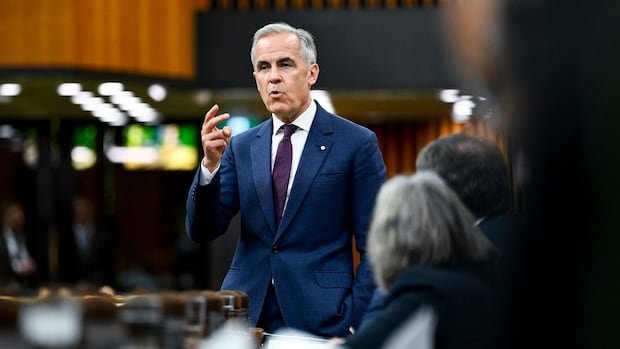

Pierre Poilievre made a striking appearance in front of journalists following a cabinet meeting on Tuesday. In a mere 10 minutes, the Conservative leader repeatedly mentioned the term “recession,” emphasizing that Canada, unlike other G7 countries, is facing economic challenges. Poilievre attributed this situation to the policies implemented under Mark Carney’s leadership, contrasting it with the economic stability in countries like Mexico, France, the U.K., Germany, Italy, and Japan.
The current economic state in Canada, labeled as a “technical recession,” is defined by two consecutive quarters of negative economic growth. While Canada experienced a decline of 1% in the fourth quarter of 2025 and an estimated 0.1% in the first quarter of 2026, the debate over the severity and implications of this downturn persists.
Poilievre’s focus on the technicalities of the recession echoes past political maneuvers surrounding economic downturns. The 2015 technical recession stirred controversy during the federal election, with differing interpretations from political parties. The current discourse between Poilievre and Carney reflects the ongoing debate on the causes and consequences of economic weakness in Canada.
Carney, addressing the recent economic challenges, highlighted factors such as reduced government spending and immigration policies as contributing to the economic slowdown. However, Poilievre criticized these explanations, attributing the recession to taxes, regulatory hurdles, and fiscal decisions made by the government.
While the blame game continues between political leaders, the economic uncertainty in Canada raises concerns for the Carney government. Despite efforts to strengthen the economy through regulatory reforms and other measures, the impact of external factors and domestic policies remains a contentious issue.
As the political landscape evolves, the economic performance under Carney’s administration will be closely scrutinized. The current technical recession, whether real or revised, serves as a cautionary tale for the government’s economic strategies and their resonance with the Canadian populace.