

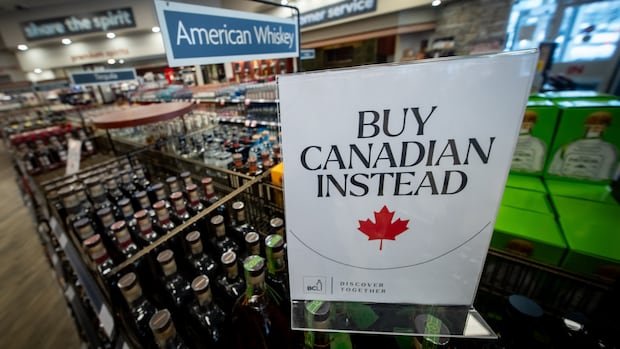

Martha Reynolds, a consumer in Halifax, consciously avoids buying American products, including alcohol. She has switched from bourbon to scotch whisky and also prefers locally produced wines from Nova Scotia, Ontario, and British Columbia over California wines.
The boycott of American alcohol in certain Canadian provinces, coupled with individual consumer choices like Reynolds’, has had a significant negative impact on the U.S. distilled spirits industry. Chris Swonger, the President and CEO of the Distilled Spirits Council of the United States, expressed concern about the situation and is advocating for a resolution.
The council reported a 63% decrease in exports to Canada last year, attributing it to the boycott of U.S. alcohol in many Canadian provinces. Additionally, some whisky producers preemptively increased shipments to the EU in late 2024 due to potential retaliatory tariffs, further affecting exports to Canada.
While the Nova Scotia Liquor Corporation (NSLC) temporarily removed American alcohol from its shelves in response to the trade war in 2025, it resumed selling existing stock later that year but did not order more American products. NSLC data on remaining American products will be disclosed with its year-end financial results in June.
Swonger acknowledged the strained political relations between the U.S. and Canada and expressed hope for improved conditions in the future. The NSLC clarified that American products excluded from their shelves are those made or produced in the U.S., distinguishing them from perceived American brands like Budweiser, which are brewed in Canada.
Despite initial strong demand, sales of American products at NSLC have decreased over time. The NSLC also clarified that certain products labeled as American, such as Southern Comfort, are actually produced in Canada.
Swonger emphasized understanding the emotions surrounding the political divide and expressed a desire for reconciliation.