

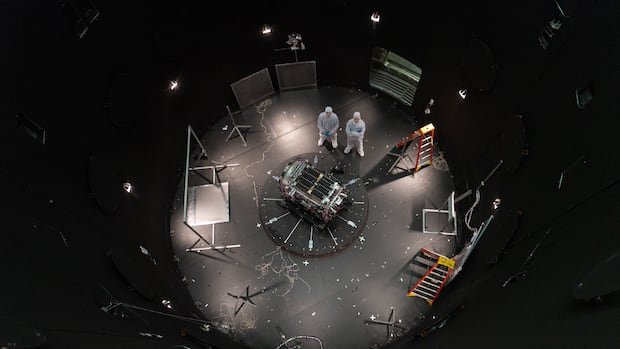

NASA’s efforts to salvage the deteriorating Swift Observatory have been terminated, leading to the telescope’s anticipated re-entry into the Earth’s atmosphere later this year. The decision to end the rescue mission was jointly announced by NASA and Katalyst Space Technologies, the company behind the Link spacecraft that was dispatched to aid Swift. Katalyst confirmed that due to challenges in controlling the spacecraft, Link will not be able to capture and elevate Swift to a higher orbit. Consequently, the telescope, known for tracing significant cosmic events such as gamma ray bursts and stellar explosions over its 20-year lifespan, is projected to descend no earlier than October.
In a bid to extend Swift’s operational life by placing it in a more secure orbit, NASA allocated $30 million to Katalyst. However, heightened solar activity caused the telescope to descend at a quicker rate than anticipated. Following its launch in early July, the rescue spacecraft encountered difficulties, including an unmanageable spin shortly after liftoff. Despite efforts to stabilize Link’s movement, persistent issues with its orientation and positioning in orbit persisted.
Expressing disappointment over the outcome, NASA’s administrator Jared Isaacman emphasized the importance of the mission’s pursuit despite its unfortunate conclusion. As a consolation, Katalyst intends to continue operating Link in close proximity to Swift to showcase its potential for future rescue missions. The company’s CEO, Ghonhee Lee, acknowledged the ambitious nature of the mission, which was hastily assembled within a year, highlighting the valuable lessons learned throughout the endeavor.
Originally launched in 2004, Swift had its scientific instruments deactivated earlier this year to decelerate its descent. With an orbit altitude of 345 kilometers as of the announcement, Katalyst had aimed to restore Swift to its original orbit at 600 kilometers, enabling further astronomical observations for an extended period.
In the event of a successful rescue, NASA’s Hubble Space Telescope stood to benefit from a similar orbital adjustment, as it is also experiencing a decline in orbit due to heightened solar activity. The fate of the 36-year-old Hubble remains uncertain following the conclusion of the Swift rescue mission.