

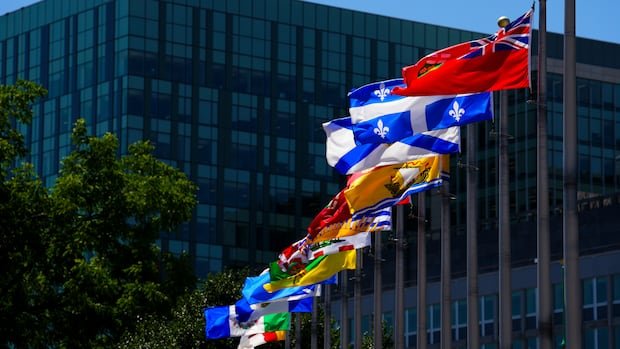

Recently, the breakdown of negotiations with the United States has heightened the importance of diminishing trade obstacles within Canada. Nonetheless, addressing these issues is a complex endeavor, according to experts.
In a recent development, efforts to enhance interprovincial trade have gained momentum. Last month, nine provinces reached an agreement to permit direct-to-consumer alcohol sales across provincial borders. However, even this progress, focusing on a specific aspect of the alcohol industry, highlights the complexities of facilitating cross-border sales. Some provinces have imposed additional fees and regulations on top of the existing requirements faced by producers in their home provinces.
Jeff Guignard, the CEO of Wine Growers British Columbia, criticized the inefficiencies in the system, stating that having to pay dual wholesale markups is unreasonable. He further highlighted the burden placed on B.C. wineries to register in other provinces merely to ship wine, contradicting the goal of promoting internal trade within Canada.
The potential benefits of streamlining domestic trade are significant. The International Monetary Fund projects that eliminating internal trade barriers could potentially increase Canada’s real GDP by up to seven percent, equivalent to approximately $210 billion in the long term.
CIBC, however, provided a more conservative estimate in March, suggesting a potential one percent GDP boost. Nonetheless, the bank emphasized the value of pursuing this goal as it could still be beneficial.
Federal and provincial ministers convened in Iqaluit this week to advance the vision of a unified Canadian economy and work towards eliminating barriers. Priorities at the meeting included reaching an agreement on facilitating services across the country, streamlining the approval process for prefabricated homes and new construction materials, and simplifying food trade in Canada.
Corinne Pohlmann, the executive vice-president of advocacy at the Canadian Federation of Independent Businesses, welcomed the renewed focus on dismantling provincial barriers. She noted that while progress has been made, ensuring the effective implementation of agreements remains a challenge.
University of Ottawa professor Wolfgang Alschner is undertaking an initiative to analyze and categorize regulations across Canada using artificial intelligence. This effort aims to identify areas of unnecessary divergence and streamline regulatory frameworks to foster greater economic integration.
Alschner emphasized the need to transition from an anecdotal to a systematic approach in identifying hidden trade barriers. He stressed the importance of harmonizing regulations across provinces to facilitate smoother trade practices in real-world scenarios.
In conclusion, the push to eliminate interprovincial trade barriers is gaining momentum as stakeholders recognize the economic benefits of fostering a more integrated Canadian market.