


DISCLAIMER: The following account contains descriptions of experiences at residential schools.
Roberta Hill was just six years old when she was sent to the Mohawk Institute Indian Residential School in Brantford, Ont.
Despite attending with her five siblings, including her beloved youngest sister, they were immediately separated upon arrival.
“I didn’t see her again for years,” Hill recalled.
“She was my favorite little sister. That marked the beginning of the separation and the ensuing trauma.”
Hill, hailing from Six Nations of the Grand River near Hamilton, was among a group of residential school survivors who shared their testimonies at the Permanent Peoples Tribunal in Montreal on Tuesday.
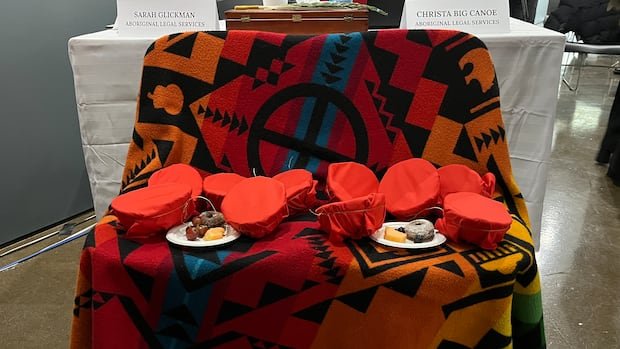
This independent international court of opinion commenced its investigation into missing Indigenous children and unmarked burials linked to residential schools on Monday.
Initiated by the Native Women’s Shelter of Montreal in 2024, the tribunal has been receiving evidence concerning Canada’s accountability for the residential school system and the associated human rights violations.
The Permanent People’s Tribunal, operational since 1979, is an autonomous international court of opinion that has probed human rights violations around the globe.
The Government of Canada, as confirmed by Crown-Indigenous Relations and Northern Affairs Canada, has opted not to partake in the proceedings.
‘Emotional Shutdown’
The afternoon session on Tuesday featured testimonies from a panel of residential school survivors, both in person and via video.
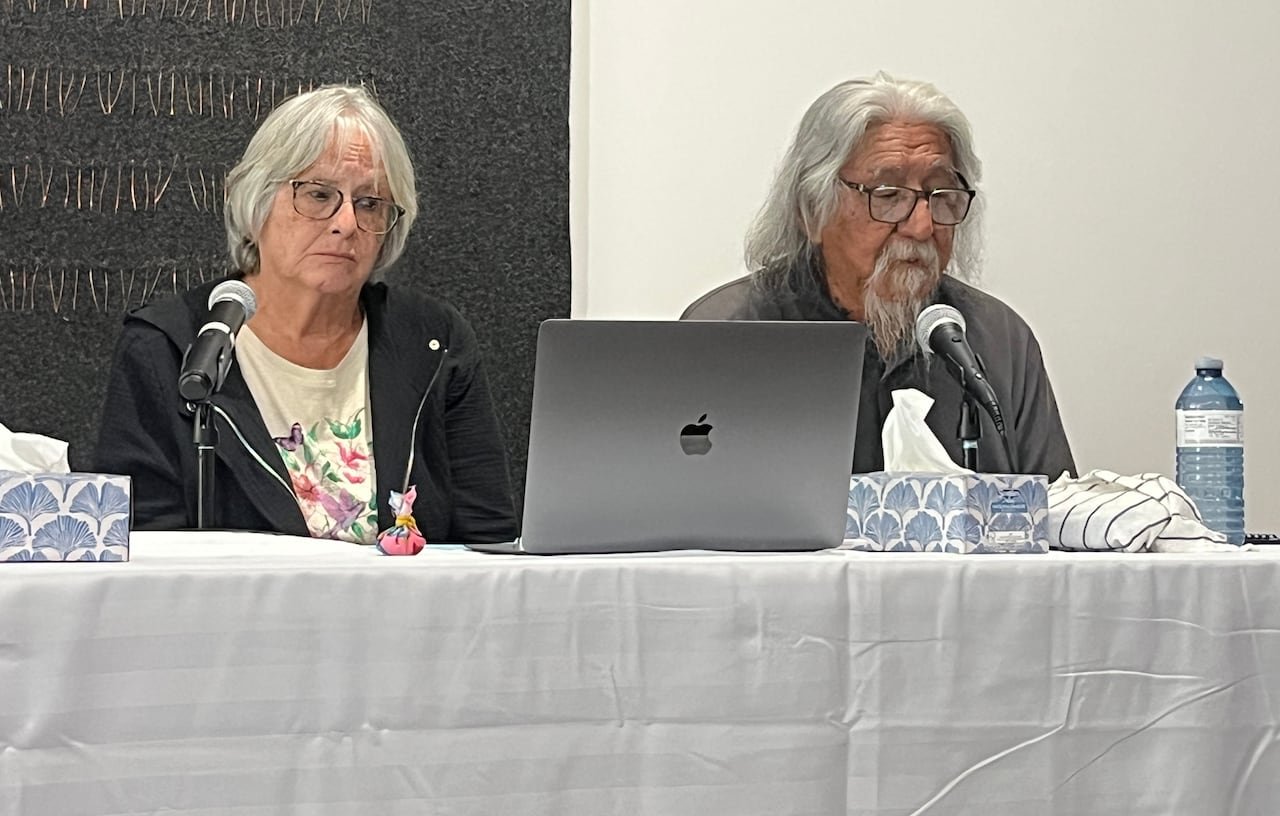
Audrey Hill, George Diamond, Leo Nicholas, and Lucy Tulugurjuk provided video statements. Hill and Sam Achneepineskum from Marten Falls First Nation in northern Ontario presented their testimonies in person.
Hill recounted attending the Mohawk Institute from age six to ten before being placed in foster care.
She described how older girls at the school were assigned to care for the younger ones, often consoling them while they wept.
“I did that for an extended period, and eventually, they would tell you to stop crying and move on, but it’s not that simple,” Hill shared.
Both Hill and Achneepineskum disclosed being victims of sexual assault during their time at residential school.
Achneepineskum, a survivor of McIntosh Indian Residential School, Cecilia Jeffrey Indian Residential School, and St. Anne’s Indian Residential School, shared his experiences starting at age 12.
Reflecting on the abuse he witnessed and endured, Achneepineskum remarked, “It really altered me,” affecting his relationships with his offspring.
“One of the lessons I learned was to shut down emotionally,” he expressed.
“You stop wanting to feel anything, a coping mechanism for enduring the daily hardships.”
‘A Systematic Approach’
In the morning session on Tuesday, the judges listened to investigative reporters Tanya Talaga and Connie Walker.
Walker, of Cree descent from Okanese First Nation in Saskatchewan