

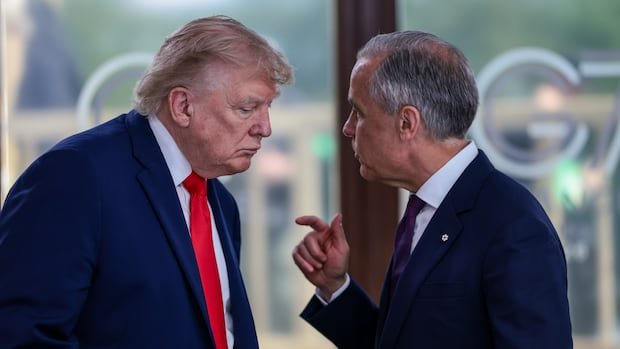

From trade disputes to verbal attacks, U.S. President Donald Trump has continuously shifted his focus to Canada, showcasing a persistent interest in discussing matters related to his northern neighbor. The conflicts have varied from threats to halt the opening of the Gordie Howe International Bridge until Canada made concessions, to blaming Canada for contributing to wildfire smoke reaching the U.S., to imposing new 50 percent tariffs on approximately $28 billion worth of Canadian products.
Most recently, Trump’s reaction to the wildfire smoke issue took a more dramatic turn. Following his warning to retaliate with tariffs due to what he labeled as Canada’s “wilful negligence” in handling the fires, Trump posted an AI-generated image on his Truth Social platform depicting a large air filter along an apparent border between the two countries.
Journalists in Washington, namely Willy Lowry, Katie Simpson, and guest host Mike Crawley, delve into the reasons behind this intensified focus on Canada and speculate on what actions might be necessary to shift the narrative.
The ongoing critique of Canada by Trump has resonated with a segment of his supporters, particularly those aligned with the “Make America Great Again” (MAGA) movement. Trump’s vocal criticisms of Canada have found traction within his base, as evidenced by feedback received during various interactions with individuals across different states.
Some recurring topics raised by Trump’s supporters include the Ottawa convoy protest, which gained attention in the American alt-right circles, and the Alberta separation movement, with sentiments of solidarity towards Albertans being likened to “snow Texans” seeking liberation from perceived infringements on rights and freedoms in Canada.
Additionally, there is a perception among some Americans that Canada embodies a liberal ideology that aligns with what the Democrats advocate, leading to concerns about the imposition of similar “woke” policies in the U.S. This portrayal of Canada as a liberal bastion serves Trump’s narrative of projecting strength through his tariff-centric economic policies without significant political consequences.
Amidst these dynamics, the question arises: What proactive steps can Canada take to navigate this situation beyond engaging in trade discussions? Embracing a “Keep calm and carry on” approach reminiscent of British resilience during World War Two may be a strategic response to the current circumstances.