

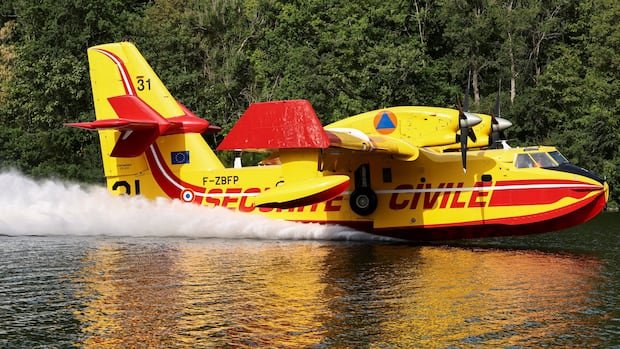

Amid a severe wildfire season in Canada, the United States, and Europe, there is mounting pressure on De Havilland, the manufacturer of the Canadair “Super Scooper” water bombers, to ramp up production. The Canadian company, based in Calgary, has decided to restart the production of Canadair after acquiring the water bomber program, previously handled by Bombardier until 2015.
The Canadair aircraft, known for their firefighting capabilities, are meticulously crafted by hand in Calgary, with components sourced from various parts of Canada. The rejuvenated production line, announced in 2022, is making progress, with the first two planes slated for completion and delivery by early 2028.
With current shortages and aging fleets, Canadian premiers and European leaders are eager to secure these aircraft. The Canadair, originating in the 1960s, was specifically engineered for combating large fires in the Canadian wilderness, boasting the ability to maneuver through narrow canyons at low altitudes and swiftly scoop up water from natural sources.
The latest iteration of the Super Scooper will closely resemble its predecessors, showcasing a design with expansive high wings, a 6,100-liter water tank, and the iconic yellow and red exterior. The political landscape is heating up as opposition figures in France and Spain criticize their governments for inadequate Canadair resources, impacting their readiness to combat wildfires.
De Havilland is feeling the pressure as demand soars for its water bombers. The company is contemplating the establishment of a second production line while focusing on the current manufacturing process. Alberta Premier Danielle Smith is advocating for a substantial order from the federal government to provide certainty to De Havilland and potentially trigger the construction of a second assembly line.
De Havilland, which employs around 4,000 individuals in Calgary, Ontario, and Victoria, currently has orders for 38 water bombers, with delivery timelines extending into 2032-2033. The intricate process of building each Canadair involves numerous Canadian-made components, some of which date back to the aircraft’s inception in the 1960s.
Experts like John Gradek from McGill University emphasize the urgent need for additional production lines to meet the global demand for Canadair aircraft. The rising demand stems from the escalating wildfire crisis worldwide due to climate change.
The threat of potential competition looms if De Havilland fails to meet the soaring demand for water bombers, potentially leading foreign companies to develop rival firefighting aircraft. Designing new aircraft would require significant time, posing a risk to Canadian manufacturing jobs.
In response to the escalating wildfire challenge, a Senate report suggests establishing a national fleet of modern firefighting aircraft in Canada. While aircraft play a vital role in fire suppression efforts, they are just one component in the firefighting toolkit, with prevention and mitigation strategies also being crucial.
The federal government has leased aircraft to support provincial wildfire crews, acknowledging the high demand for aerial firefighting resources. Efforts are underway to bolster national capacity to tackle intense wildfire seasons in collaboration with provincial and territorial authorities.