

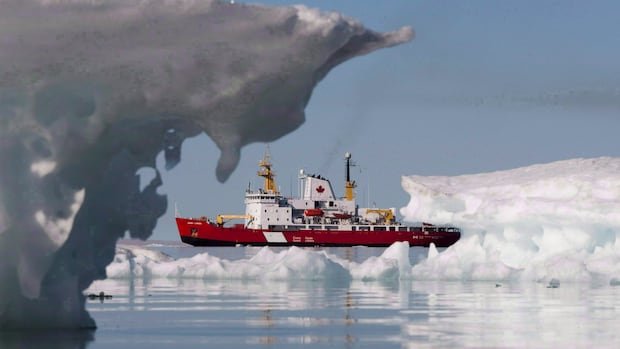

Canada is set to allocate $816 million towards enhancing maritime security over the next seven years, aiming to bolster the coast guard’s capabilities across the nation’s coastal regions, including the high Arctic. Defense Minister David McGuinty made this announcement in Iqaluit, emphasizing the significance of this investment in safeguarding Canada’s Arctic territories and its people.
While the allocated funds will be utilized in various Canadian regions, such as the East and West Coasts, the Great Lakes, and the St. Lawrence River, the primary focus will be on reinforcing security and defense capacities in the Arctic. In a strategic move, the Liberal government transferred the Canadian Coast Guard from Fisheries and Oceans Canada to the Department of National Defence in September. This transition grants the coast guard authority to gather, evaluate, and exchange intelligence related to national security threats.
McGuinty outlined that the $816 million funding will drive the expansion of the coast guard’s defensive operations in the north through four key initiatives:
– Establishing a year-round maritime domain awareness center in Iqaluit for collecting and analyzing maritime intelligence.
– Equipping coast guard helicopters nationwide with new reconnaissance gear to enhance security patrols.
– Constructing four new Arctic long-range radar sites along the Northwest Passage and in the Hudson Strait.
– Acquiring short- and medium-range drones capable of operating in the air, on the surface, or underwater to extend the coast guard’s operational range.
The investments in drones and radar systems aim to enhance real-time situational awareness, reinforce year-round operations in the Arctic, and uphold the protection and sovereignty of Canada’s northern waters, as per a statement from National Defence. In another development, it was revealed that Canada plans to collaborate with Australia to construct an early warning radar system for the Arctic, with Prime Minister Mark Carney announcing a substantial investment exceeding $6 billion into the project.
The funding for this initiative was initially disclosed in 2022 as part of the modernization plan for the North American Aerospace Defense Command (NORAD). McGuinty highlighted that the investment rollout will commence with the establishment of new radar sites. Additionally, the specific procurement of drones remains pending, as decisions on the type and quantity of drones to be acquired will be determined by the coast guard according to its operational requirements to fulfill the expanded mandate.