

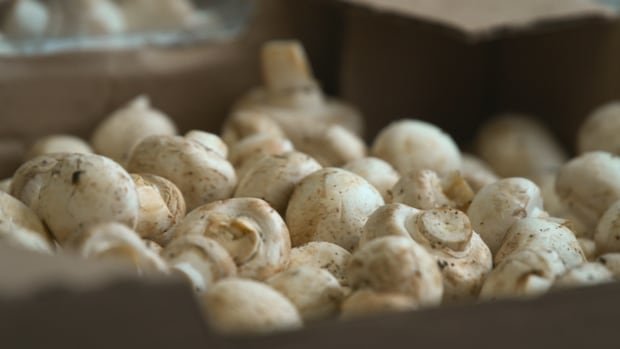

The United States has imposed countervailing duties on fresh mushrooms imported from Canada after an investigation by the U.S. Department of Commerce. The Canadian mushroom industry has criticized the investigation as being flawed. The new tariffs, outlined in the federal register on Monday, will apply a rate of 2.84 percent to most fresh mushrooms.
Champ’s Fresh Farms Inc. and Farmers’ Fresh Mushrooms Inc. face separate duties of 1.62 percent and 4.97 percent, respectively. Additional anti-dumping duties are expected to be included later this month.
The preliminary findings of the Commerce investigation alleged that Canadian mushroom producers benefitted from unfair government subsidies. However, Mushrooms Canada CEO Ryan Koeslag argued that Canadian growers have not engaged in unfair trade practices and are not receiving preferential treatment.
Koeslag criticized the Commerce department’s rationale, stating that categorizing broad-based agricultural tax measures as unfair subsidies is illogical and unfairly penalizes Canadian mushroom growers participating in common agricultural programs available in various countries.
The investigation was initiated in response to a complaint by the U.S.-based Fresh Mushrooms Fair Trade Coalition, alleging that tax exemptions for Canadian mushrooms constituted unfair subsidies. Giorgio Mushroom Co., part of the U.S. coalition, supported the imposed duties as a necessary step to address the impact of subsidized mushroom imports on domestic production.
William Pellerin of McMillan LLP, an expert in international trade, highlighted that the Commerce investigation does not consider potential agriculture subsidies received by U.S. producers. While the initial subsidy rate is minimal, the investigation into Canadian mushrooms is ongoing.
The Canadian mushroom industry can challenge the countervailing duties through the appeal mechanism under the Canada-U.S.-Mexico Agreement (CUSMA). These duties differ from President Donald Trump’s broader tariff policies, which have targeted various sectors including steel, aluminum, automobiles, and cabinetry.
Pellerin suggested that the push for tariff realignment in global trade may prompt other U.S. agricultural industries to seek Commerce investigations. This trend could extend to Canada, where associations are increasingly pursuing cases against agricultural imports from other countries.