

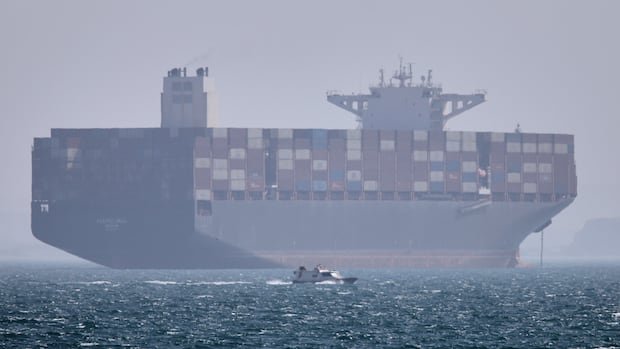

The United States military reported thwarting Iranian assaults on three American naval vessels in the Strait of Hormuz on Thursday while also striking Iranian military installations responsible for attacking U.S. forces. The incident underscored the delicate nature of the recently established ceasefire between the two nations.
According to U.S. Central Command, American forces intercepted what they described as unprovoked Iranian attacks and retaliated with defensive measures. Despite the confrontation, no U.S. ships sustained damage, with the military emphasizing a stance against escalation while remaining vigilant to safeguard American troops.
President Donald Trump, speaking in Washington, confirmed the ceasefire’s stability in the face of the day’s events, stating, “They trifled with us today. We blew them away.” Meanwhile, Iranian state media disclosed an exchange of fire with an unidentified adversary on Qeshm Island in the strait, the largest Iranian island in the Persian Gulf.
Additional reports from Iranian sources highlighted disturbances in different regions of the country, including loud noises and defensive actions in western Tehran and explosions near Bandar Abbas in southern Iran. Earlier that day, a shipping data company disclosed Iran’s formation of a regulatory body to authorize and levy fees on ships seeking passage through the strategically vital Strait of Hormuz.
The move by Iran to assert control over the waterway raised concerns about international maritime operations, leading to congestion of commercial vessels in the Persian Gulf. Nonetheless, optimism surrounding a potential resolution to the two-month-long conflict positively impacted global markets.
Divergent messages from the U.S. government complicated the situation, with the ceasefire holding since April 8, following unsuccessful peace discussions hosted by Pakistan last month. Despite ongoing deliberations over U.S. proposals to end the conflict, Iran has yet to provide a formal response, as conveyed by Iranian Foreign Ministry spokesperson Esmail Baghaei.
The U.S. Secretary of State’s meeting with Pope Leo XIV at the Vatican underscored ongoing efforts toward Middle East peace, amid wavering U.S. strategies regarding the conflict’s resolution. President Trump reiterated warnings of potential consequences if a deal is not reached with Iran, emphasizing the uncertainty surrounding the negotiation process.
Pakistan expressed optimism for an imminent agreement between the conflicting parties, with Foreign Minister Ishaq Dar engaging in discussions with his Iranian counterpart. Prime Minister Shehbaz Sharif reiterated Islamabad’s commitment to facilitating peace talks between Iran and the U.S. while also addressing regional stability concerns.
In a parallel development, direct talks between Israel and Lebanon are set to resume in Washington next week, as revealed by a U.S. official. The creation of a new Iranian government agency to oversee transit and impose tolls on ships navigating the strait raised alarms about the impact on global maritime trade and international law.
The United States and its allies are advocating for UN Security Council support in condemning Iran’s control over the strait, with calls for a resolution to counter the disruptions caused by the conflict.
This article was originally published on CBC News.