

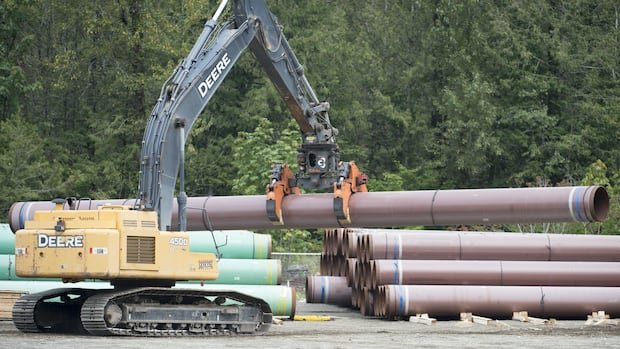

A recent report from TD Economics suggests that the potential economic benefits of a new oil pipeline to the West Coast for Canada and Alberta may not be as significant as projected by the provincial and federal governments. The analysis indicates a projected 0.6% boost to the national economy by the 2040s and a 3.5% increase for Alberta.
Economists Marc Ercolao and Likeleli Seitlheko caution that these figures, while informative, should be considered as optimistic estimates provided by project proponents and government entities advocating for development. They propose more conservative assumptions, suggesting a potential 0.3% national increase and a two percent provincial growth instead.
Despite the possibility of the actual impacts falling short of official estimates, the economists emphasize that the pipeline project would still make a substantial contribution to economic growth, especially when considering enhanced market access and export diversification.
Alberta has recently submitted its application for the construction of the pipeline, which is anticipated to transport up to one million barrels per day. The project, to be managed by Crown-owned Trans Mountain Corp, is estimated to cost between $35 billion and $44 billion. Currently, 90% of the funding is expected to be shared by the federal and provincial governments, with Pembina Pipeline Corp holding an initial 10% stake.
The proposed pipeline, following a route similar to the existing Trans Mountain line to a port south of Vancouver, is projected to increase Canada’s oil exports by 20% and significantly boost shipments to Asia. The aim of expanding exports to the Pacific is a crucial aspect of Alberta’s pipeline strategy.
While there is optimism about Asia’s interest in Canadian oil, the TD economists caution that the region’s oil demand may plateau as China transitions towards cleaner energy sources, potentially impacting Canadian heavy crude’s competitiveness against other global suppliers like Russia.
The Alberta government anticipates that the pipeline will receive national importance designation in the coming months, with construction potentially commencing by late 2027.